Maia Atlantis: Ancient World Blogs

http://planet.atlantides.org/maia

Tom Elliott (tom.elliott@nyu.edu)

This feed aggregator is part of the Planet Atlantides constellation. Its current content is available in multiple webfeed formats, including Atom, RSS/RDF and RSS 1.0. The subscription list is also available in OPML and as a FOAF Roll. All content is assumed to be the intellectual property of the originators unless they indicate otherwise.

July 03, 2009

Irene Hahn and Bingley Austin (Roman History Books and More)

back to horace: carpe diem

Odes, Book 1, XI

Tu ne quaesieris, scire nefas, quem mihi, quem tibi
finem di dederint, Leuconoe, nec Babylonios
temptaris numeros. ut melius, quidquid erit, pati.
seu pluris hiemes seu tribuit Iuppiter ultimam,
quae nunc oppositis debilitat pumicibus mare
Tyrrhenum: sapias, vina liques et spatio brevi
spem longam reseces. dum loquimur, fugerit invida
aetas: carpe diem quam minimum credula postero.

Leuconoë, don’t ask, we never know, what fate the gods grant us,
whether your fate or mine, don’t waste your time on Babylonian,
futile, calculations. How much better to suffer what happens,
whether Jupiter gives us more winters or this is the last one,
one debilitating the Tyrrhenian Sea on opposing cliffs.
Be wise, and mix the wine, since time is short: limit that far-reaching hope.
The envious moment is flying now, now, while we’re speaking:
Seize the day, place in the hours that come as little faith as you can.

Translation:  A.S. Kline, Poetry in Tranlation: Horace

Adrian Murdoch (Bread and Circuses)

Mutina splendidissima

The northern Italian town of Modena, ancient Mutina, managed to survive into late antiquity without too much damage. It even avoided being sacked by Attila - no mean feat. There is a brief piece in Archaeogate about the recent discovery of a late Roman necropolis in the town:

Nel prossimi giorni si completerà lo scavo di circa una dozzina di tombe, del tipo a cassa laterizia e a cappuccina (IV-VI secolo d.C.), rinvenute al di sopra di un consistente deposito alluvionale che ha seppellito in età tardoantica la città di Modena (Mutina) e il suo suburbio.

Sono state al momento scavate soltanto 6 tombe: tre con inumato, prive di corredo funerario, e le restanti tre vuote, probabilmente perché fatte realizzare da un committente, per sé e per i propri congiunti, quando era ancora in vita ma rimaste inutilizzate forse in seguito ad un'altra alluvione che ha coperto la necropoli.

Gli scavi appena iniziati hanno restituito, dai depositi più profondi, resti di murature riferibili verosimilmente a strutture residenziali o produttive nonché diversi frammenti di ceramica da cucina e da mensa, stucchi, intonaci, anfore e alcune monete degli imperatori Claudio, Domiziano e Diocleziano (I-III secolo d.C.).

Image: Foto di Paolo Terzi per la Soprintendenza per i Beni Archeologici dell’Emilia-Romagna
33_article_1096_1


Noel Tan (The Southeast Asian Archaeology Newsblog)

Treasures of Sumatra opens in Jakarta

An exhibition showcasing the ancient history and heritage of Sumatra is on show at the National Museum in Jakarta, before going to the Netherlands and the Asian Civilisations Museum next year. It looks like something I’m definitely going to catch at the ACM!

_13_0238
Creative Commons License photo credit: Marc Veraart

Nat’l Museum displays ancient Sumatran heritages
Jakarta Post, 8 June 2009

Jakarta ’s National Museum began Monday to display more than 200 collections of ancient Sumatran heritages.

The exhibition will last through Sept. 8.

Ancient inscriptions, maps, manuscripts, statues, and even Chinese ceramics and sultanate regalia – all originated from past kingdom lives of Sumatrans – are available to be looked at.

Currency of ancient Aceh kingdom Samudera Pasai, royal swords and keris, a Sultanate oar, traditional musical instruments and dresses, and miniatures of traditional Sumatran houses (such as the Rumah Gadang, Batak Karo houses and Nias houses) are also on display.


July 02, 2009

David Meadows (rogueclassicism)

Classic Bleacher Report


I’m sure I’m not the only Classicist who gets some of his sports news from the Bleacher Report, but I might be the only one who caught not one, not two, but three Classical references in Bleacher Report items over the past while. Back on May 21 (sorry … it’s been sitting in my box for a while), Brandan Fahey opened his commentary on the Magic-Cavaliers game thusly:

Orlando just stole our Helen—home-court advantage.

In a stunning loss, the Cavaliers were dominated by a juggernaut. They were beaten and beaten badly.

Shooting 55 percent from the floor? How nasty is that? Not in our house—well, actually it was in our house. Orlando’s young princes Hector and Paris (Howard and Lewis) ran away with the most coveted thing that Cleveland posses—home-court advantage. Its what we played the last 82 games for.  Aaaagh!

Oh well, as Homer put it, a thousand Greek warships descended upon the waiting Trojans. Orlando, unlike the real Trojans, do not have a wall to hide behind. Or at least, I don’t think they do.

However, Cleveland does have and Odysseus—and an Achilles on their side.

On the same day, Greg Caggiano was pondering NHL trade rumours:

One of the greatest thinkers in human history—the historian, the epistemologist, the philosopher. The man known as Socrates. Although he died around four-hundred B.C, I’m pretty sure that he knew what was coming in the later centuries to come even though the sport of hockey wasn’t even an idea until thousands of years later.

Of all his great achievements and works, Socrates is perhaps best known for a quote that said, “All I know is that I know nothing,” and that is how our Greek friend relates directly to not just trade rumors involving the NHL, but for all sports.

More recently, on June 12, Dayne Duranti was pondering the question of why Americans need football, inter alia:

I believe human beings are inherently violent. It’s not anything that we can control. It is subconscious, it is dark, and it is real. Football pleases our subconscious violence in a way that no other sport can quench.

Like the Romans and the Lions, the coliseums are packed every time. No one can (or wants to) really answer why we have this inner need for carnage, to see a grown man unload on another, nor do we care. It is pleasing and soothing during troubled times.

Outside of the cliche involved in the latter reference, I wouldn’t mind seeing more Classical references in the sports pages besides Achilles’ injuries …

Compitum

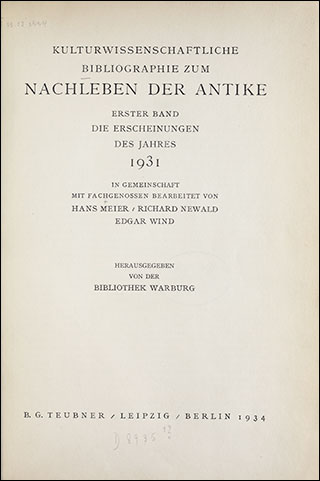
Die Cartocetto-Bronzen - die Lösung eines Rätsels? (07.07.2009, Bielefeld)

Information signalée par Marie-Karine Lhommé


Die Cartocetto-Bronzen - die Lösung eines Rätsels?

Prof. Dr. Hans Beck, Montreal/Kanada


Fakultät für Geschichtswissenschaft, Philosophie und Theologie - Abteilung Geschichte
Althistorisches Kolloquium
Aktuelle Forschungsprobleme der Alten Geschichte


Programme complet

28.04.2009
Dr. des. Nicole Remmele, Innsbruck
Konfliktlösungen im archaischen Griechenland

12.05.2009
Prof. Dr. Elke Hartmann, Berlin
Martial und das stadtrömische Klientelwesen

26.05.2009
Juan-Pablo Lewis, Edinburgh/Berlin
Sklaverei und Humanität - eine neue Voraussetzung für eine alte Frage

09.06.2009
Prof. Dr. Werner Eck, Köln
P. Quinctilius Varus - glanzvolle Karriere und Katastrophe

23.06.2009
Dr. des. Dorothea Rohde, Bielefeld
Finanzen als politisches Argument bei Demosthenes

07.07.2009
Prof. Dr. Hans Beck, Montreal/Kanada
Die Cartocetto-Bronzen - die Lösung eines Rätsels?


21.07.2009
Simone Blochmann, Tübingen
Principatskonstruktionen: Kaiserzeitliche Machtstrukturen in Senecas De Clementia

Lieu précis de la manifestation : Universitätsgebäude (UHG) R 2 149
Contact : Prof. Dr. Uwe Walter uwe.walter@uni-bielefeld.de
Source : Université de Bielefeld

David Meadows (rogueclassicism)

Gela Shipwreck?


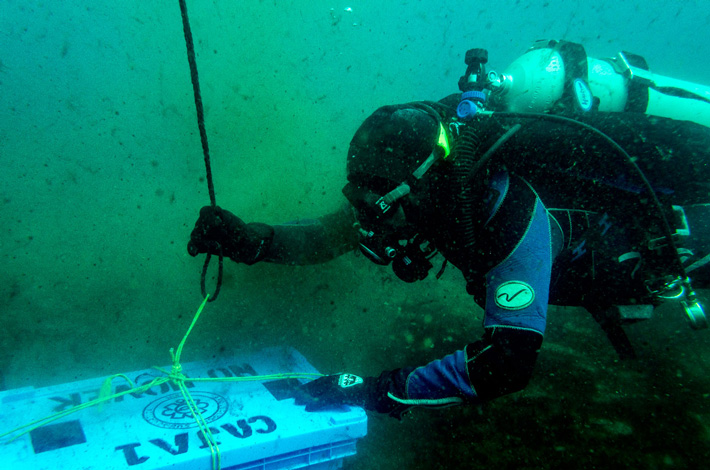
This is another one from the Italian press which I’ve been hoping would get some notice in the English press, but it doesn’t appear that that will be happening. The Carabinieri have been diving in the sea near Caltanisetta to recover assorted archaeological items which appear to be associated with several periods and several (?) shipwrecks (and, to judge from the divers, a crime of some sort). Artifacts are said to come from Roman, Greco-Hellenistic, and Byzantine periods. The only artifact that is specified as being recovered is an intact Byzantine patera, inscribed with a dove.

CFP: The Alexander Romance in the East


… seen on the Classicists list:

*The Alexander Romance in the East*

July 26-29, 2010

The University of Exeter’s Department of Classics and Ancient History and the Institute of Arab and Islamic Studies will be hosting a conference at Exeter which sets out to explore issues and growth points in the study of the Greek Alexander Romance and its transformations in the Persian and Arab traditions, as well as aspects of the Hebrew tradition as it impinges on the Muslim world. For more details see our website, http://huss.exeter.ac.uk/classics/conferences/alexander_romance_in_the_east.php

Over three days we hope to include some twenty contributions on such topics as the following:

The development of the Greek tradition and its texts, from the Hellenistic to the Byzantine period
The historical impact of Alexander on the east and Central Asia
Indian reactions
Mapping Alexander and the east in the medieval west
Alexander in the Qur’an and in the Arabic romances
Persian versions of Alexander
Alexander in the Talmud and its influence
Specific stories – including the Water of Life, the Flying Machine, the Diving Bell, the encounter with the Brahmans

A number of scholars have agreed to speak, but we have room for more. To offer a paper, or for information about attending the conference, please contact:

Richard Stoneman at the Department of Classics and Ancient History, University of Exeter, AmoryBuilding, Rennes Drive, Exeter EX4 4RJ, UK: richard14stoneman AT btinternet.com OR R.Stoneman AT exeter.ac.uk

*Abstracts*
of proposed papers (twenty minutes) should be no more than 250 words long and should be sent to Richard Stoneman by **31st January 2010** for consideration by the conference committee.

UK News


Seems like a good time to catch up with a pile of brief news items from the UK that have accumulated over the past few weeks:

A caesium vapour magnetometer was used at Caistor St Edmund to get a better idea of the layout of Venta Icenorum:

A pair of Roman burials turned up in a Leicestershire garden:

Plans are afoot to reveal more of Wroxeter Roman City (a.k.a. Viroconium):

Digging has resumed at a bath site in Northamptonshire:

Remains of a Roman road at Tesco:

Some letters from the 1940s by the schoolboy who found Bristol Roman Villa were found:

Digging has resumed at Arbeia Roman Fort:

They’re still fighting to preserve the site of Colchester’s Roman circus:

Castleford’s Roman bathhouse is getting some recognition:

A Roman well from Chester:

A metal-detecting group from Bridlington has found a hoard of 75 silver coins and 10 bronzes dating to the mid-fourth century:

There were also a few reenactment events which folks might be interested in reading about … in Carlisle YorkSt Albans (sort of) …

Mary Beard (A Don's Life)

Was Alexander the Great a Slav?

613x This is a row I really don't get. Over the last few years FYROM (the Former Yugoslav Republic of Macedonia) has been investing heavily in Alexander the Great. FYROM's main airport is now called "Alexander the Great Airport" (better than "John Lennon" or "Bob Hope" airports, you might think).  A vast statue of Alexander (eight storeys high, apparently) is planned for the centre of Skopje. And the word on the street is that Alexander was a Slav.

This seems to me to be at best rather touching. It's nice to think that there is still enough symbolic life in this drunken juvenile thug that someone wants him for their nation. At worst, it is faintly silly. The antecedents of Alexander are a bit murky, but in truth there isn't a cat in hell's chance that he was a Slav. I can see also that it could be a bit annoying to some Greeks who might want to try to claim Alexander for themselves (this is a better claim than the Slavic one, but not exactly cast iron).

But what on earth has persuaded over 300 classical scholars (several of whom are good friends of mine) to sign a letter to President Obama (copy to Mrs Clinton et al.) asking him to intervene personally to clear up this FYROM historical travesty.

I hope Obama has got some more important wrongs to right. But supposing that he has had a minute to look at this missive, I trust that he won't be won over by the outraged arguments.

Alexander_the_great_biography The territory of FYROM, they point out, is more strictly that of ancient Paionia, not Macedonia (fair enough, but so what -- we dont stop Northern Ireland calling itself part of Great Britain, even though it wasn't part of ancient Britannia). The other arguments in the letter are decidedly dodgier, and not the kid of thing that the learned signatories would (I hope) give high marks to in an undergraduate essay.

There is the usual stuff about how Alexander's ancestors must have been Greek as they competed in the Olympic Games (in fact there was originally some dispute at the time about whether they were, or were not, Greek enough to qualify). But the worst argument is the claim that 'the Macedonians traced their ancestry to Argos", and so were bona fide, not FYROM-style, Greeks. Well of course the Macedonians said that. It was a convenient and self-serving MYTH, no truer than the Athenians' claim that they were born from the soil of Athens.

By putting their names to this rubbish, I cant help feeling that my friends are stooping to exactly the kind of nationalsm that they are trying to oppose. If you really wanted to undermine the Macedonian claims, wouldn't it be better (and academically more credible) simply to laugh at them and just refuse to take them seriously?

David Meadows (rogueclassicism)

CSI Ancient Greece?


Interesting item from New Scientist which is making the rounds of Slashdot (and I just saw it float past on a couple of Twitter entries too). Here’s the incipit:

You might call it “CSI Ancient Greece”. A computer technique can tell the difference between ancient inscriptions created by different artisans, a feat that ordinarily consumes years of human scholarship.

“This is the first time anything like this had been done on a computer,” says Stephen Tracy, a Greek scholar and epigrapher at the Institute for Advanced Study in Princeton, New Jersey, who challenged a team of computer scientists to attribute 24 ancient Greek inscriptions to their rightful maker. “They knew nothing about inscriptions,” he says.

Tracy has spent his career making such attributions, which help scholars attach firmer dates to the tens of thousands of ancient Athenian and Attican stone inscriptions that have been found.

“Most inscriptions we find are very fragmentary,” Tracy says. “They are very difficult to date and, as is true of all archaeological artefacts, the better the date you can give to an artefact, the more it can tell you.”

Just as English handwriting morphed from ornate script filled with curvy flourishes to the utilitarian penmanship practiced today, Greek marble inscriptions evolved over the course of the civilisation.

“Lettering of the fifth century BC and lettering of the first century BC don’t look very much alike, and even a novice can tell them apart,” Tracy says.

But narrowing inscriptions to a window smaller than 100 years requires a better trained eye, not to mention far more time and effort; Tracy spent 15 years on his first book.

“One iota [a letter of the Greek alphabet] is pretty much like another, but I know one inscriber who makes an iota with a small little stroke at the top of the letter. I don’t know another cutter who does. That becomes, for him, like a signature,” says Tracy, who relies principally on the shape of individual letters to attribute authorship.

However, these signatures aren’t always apparent even after painstaking analysis, and attributions can vary among scholars, says Michail Panagopoulos, a computer scientist at the National Technical University of Athens, who led the project along with colleague Constantin Papaodysseus.

“I could show you two ‘A’s that look exactly the same, and I can tell you they are form different writers,” Panagopoulos says.

Panagopoulos’ team determined what different cutters meant each letter to look like by overlaying digital scans of the same letter in each individual inscription. They call this average a letter’s “platonic realisation”.

After performing this calculation for six Greek letters selected for their distinctness – Α, Ρ, Μ, Ν, Ο and Σ – across all 24 inscriptions, Panagopoulos’ team compared all the scripts that Tracy provided.

The researchers correctly attributed the inscriptions to six different cutters, who worked between 334 BC and 134 BC – a 100-per-cent success rate. “I was both surprised and encouraged,” Tracy says of their success.

“This is a very difficult problem,” agrees Lambert Schomaker, a researcher at University of Groningen, Netherlands, who has developed computational methods to identify the handwriting of mediaeval monks, which is much easier to link to a writer compared with chisel marks on stone.

I wonder, though, if an apprentice would make letters the same way his mentor did …

The New Scientist piece seems based on a couple of papers, one ‘techie’, one ‘arky’:

Peter Tompa (Cultural Property Observer)

Recalcitrant Archaeologist Embarrases German Police

Nathan Elkins writes about German archaeologist Michael Muller-Karpe's refusal to hand over a gold vessel that Muller-Karpe claims to be stolen from Ur in Iraq to German customs authorities. See: http://coinarchaeology.blogspot.com/2009/07/curious-case-of-gold-vessel-from-ur.html

Muller-Karpe is certainly well-known in Germany for his anti-collector and anti-trade views. Thus, it is a bit surprising German customs ever viewed him as someone who could be trusted to provide an independent opinion on the origin of the vessel in question. Now, Muller-Karpe has evidently taken the law into his own hands because he disagrees with the efforts of German authorities to take the vessel back into custody. Presumably, he fears it will be returned to the action house from which it was seized.

US law enforcement should also be wary of similar "free help" from US archaeologists with an axe to grind against collectors. Such archaeologists have their own agendas as Muller-Karpe's recalcitrance suggests.

Magnus Reuterdahl (Testimony of the Spade)

A few finds


skepplanda_s32

A few finds from Skepplanda 32. The majority of the finds are different kinds of flints;

 flint square arrow head and chip

A square flint arrow head and a small flint chip (ca 15 mm x 3 mm)

 flint knife

A flint knife

 flint scrape

A flint scrape

 flint chip

A flint chip

These are just a few of our finds, most finds are flints that are raw material, of bad quality, possibly waste material etc. The settlemnet and these findings are tentatively dated as about 5000 years old, we hope to find hearths or other foundations that can help us date the settlement with a better certainty.

If you happen to be in Sweden around Gothenburg you are welcome to visit our dig, we (Arkeologicentrum) have daily tours at 12.30 Monday to Friday (Information in Swedish on how to find us are availble in this pdf; Flygblad_Skepplanda_32, please contact me if you want this in English) july 2 – july 16th.

Magnus Reuterdahl

Charles Ellwood Jones (AWOL: The Ancient World Online)

Open Access Journals: The Ancient World in Catalonia

RACO (Catalan Journals in Open Access) is a cooperative repository for open access full-text scholarly jouranls from Catalonia.
Cota zero: revista d'arqueologia i ciència
Cota zero (ISSN 0213-4640) va néixer l'any 1985 com a plataforma editorial per a la divulgació de la recerca, la formació i el debat relacionats amb l'arqueologia científica. L'eix de cada número el constitueix un «Dossier» que tracta en profunditat i de manera transversal un tema monogràfic d'actualitat amb articles d'investigadors de reconeguda vàlua internacional. La interdisciplinarietat que presenta avui l'arqueologia és analitzada a l'apartat «Col·laboracions especials», una secció en la qual destaquen les anàlisis sobre metodologia, pensament i historiografia de la disciplina arreu del món. Un darrer apartat, «Notícies arqueològiques», informa sobre jaciments excavats recentment i en remarca les singularitats patrimonial, cronològica i científica.
Cuadernos de Arqueología Mediterránea
Cuadernos de Arqueología Mediterránea (ISSN 1578-1356) estudia i difon el món de l'arqueologia mediterrània. Es publica en volums monogràfics, que inclouen contribucions sobre temes específics. També inclou estudis descriptius i tipològics que permeten entendre millor alguna de les èpoques del Mediterrani protohistòric. S'incideix en qüestions de teoria i mètode de l'arqueologia, investigacions ecològiques i paleoambientals o de qüestions conceptuals, com el colonialisme, els orígens d'estat, la dinàmica social, etc.
Empúries: revista de món clàssic i antiguitat tardana
Empúries (ISSN 0213-9278) és una publicació bianual del Museu d'Arqueologia de Catalunya, que publica, des de l'any 1939, treballs científics de recerca generals sobre el món clàssic i l'antiguitat tardana de Catalunya i de la Mediterrània occidental fins l'alta edat mitjana. La revista desenvolupa una secció de tema monogràfic, amb articles de profunditat, tipus assaig o de síntesi; una d'estudis, amb articles d'assaig o de síntesi, analítics o concrets, de tema lliure i una secció amb ressenyes bibliogràfiques.

Fins l'any 1983 el títol era Ampúrias (ISSN 0212-0909)

Fòrum: temes d'història i d'arqueologia tarragonines
Fòrum (ISSN 1887-1704) és una publicació del Museu Nacional Arqueològic de Tarragona (MNAT), de periodicitat variable, orientada a la difusió científica de treballs referents, essencialment, a la història i l'arqueologia de Tàrraco i de l'Ager Tarraconensis.
Ítaca: quaderns catalans de cultura clàssica
Ítaca (ISSN 0213-6643) és una revista de recerca en estudis clàssics, publicada per la Societat Catalana d'Estudis Clàssics de l'Institut d'Estudis Catalans i que compta amb l'assessorament d'un comitè internacional d'especialistes. Amb aquesta publicació, la Societat pretén col·laborar en la redimensió de tota la cultura clàssica des d'una òptica interdisciplinària i amb rigor filològic. Té obertes les portes als estudiosos del país i d'arreu amb novetats per comunicar sobre el nostre àmbit d'estudi.
Treballs d'Arqueologia
Treballs d'Arqueologia (ISSN 1134-9263) és una publicació periòdica anual que edita el Centre d'Estudis del Patrimoni Arqueològic de la Prehistòria (CEPAP) i que recull les línies de recerca del centre. El contingut de cada volum és monogràfic amb aportacions d'investigadores i d'investigadors nacionals i internacionals especialistes en els temes als quals es dedica cada número de la revista.

David Meadows (rogueclassicism)

Jericho Quarry – That Legionary Banner (not)


I think I might be onto something here … just yesterday I was wondering about claims of an image purported to be a “legionary banner” found in that cave full of Christian symbols. If you read my coverage already, you know that I was having great difficulties seeing a banner in what was presented (apparently) as such. Amicus noster Joseph Lauer sent along a pile of links to photos from the site, including a better one of the item in question:

from ynet

from ynet

I’ve been staring at this for roughly an hour now, trying my darnedest to see a Roman vexillum or something vaguely military in it. I fiddled with it in photoshop to see if something was ‘hiding’. All to no avail. Then I realized I had seen this thing before … at Dura Europos. Ecce:

Wikimeda Commons

Wikimeda Commons

It’s that fresco usually dubbed ‘Ezekiel’s vision’. The thing on the right is the Mount of Olives being rent in two with all the resurrected folk spilling out. It seems to me that the incised image from the cave near Jericho is a stylized version of this … a single olive tree on top (the triangular thing) to designate the ‘olive’, and the mountain is split in two down the middle and across. Feel free to comment …

Paul Barford (Portable Antiquity Collecting and Heritage Issues)

UK Heritage Bill a Non-Starter again

It is reported on the CBA's website that the Heritage Protection Bill for England and Wales does not appear in the UK's Draft Legislative Programme for 2009/10 announced by the Government this week. This means that there is little hope of the legislative reforms promised by the 2007 White Paper promised will now occur. The proposed legislation envisaged placing the historic environment at the heart of the planning system. As Mike Heyworth, CBA’s Director said: "Our historic environment fundamentally shapes the quality of our surroundings and is integral to policies for sustainability. It must be at the heart of new policies for the way places are designed and planned, not side-lined as a low priority".
The Bill aimed to simplify and strengthen existing legislation and introduce opportunities for people to be more involved in protecting and enhancing their local heritage. It also paved the way for the signing and ratification of the Hague Convention, the UNESCO Convention on the Protection of Cultural Property in the Event of Armed Conflict. Without the Bill, the UK will soon be the only international power not to have signed the convention.

As the CBA points out, the lack of Government commitment to these reforms is deplorable.

David Meadows (rogueclassicism)

New Finds at the Villa of the Mysteries


A pair of articles in the Italian press have been lingering in my box for a couple of days … I figured something would have appeared more widely in the Italian press and at least something in the English press on this by now, but apparently not. Anyhoo, according to the news reports, there have recently been revealed at the Villa of the Mysteries:

  • a wine cellar with a row of dolia
  • ‘rustic’ rooms with their tiles intact
  • new areas of the first floor

Other features are mentioned in passing as well. Perhaps more importantly, though, the article highlights the difficulties faced by the folks in charge in regards to dealing with illegal building on the site (including that restaurant that’s ‘right there’ and a family of gypsies living next door).

jps (Idle Musings of a Bookseller)

Monthly sale at Eisenbrauns

How about a new sale? New month, new sale...Here's what we have to offer this month, ripped directly from BookNews:

BookNews from Eisenbrauns

Every few years we get permission from Ugarit Verlag to run a 40%
sale on some of their titles. This is the year, and July is the
month. For the entire month, you can save 40% on 25 AOAT titles
and 5 AVO titles. Titles are sorted by AOAT volume number, with
AVO titles following, also by number.

As always, all sales on this web sale are final; no returns will be
permitted. Offer good only on orders placed at www.eisenbrauns.com
through July 31, 2009.

To easily access all the sale items, please visit:
http://www.eisenbrauns.com/pages/SPECIAL
================================================================
"Religion und Gesellschaft, Volume 1: Studien zu ihrer Wechselbeziehung
in den Kulturen des Antiken Vorderen Orients"
Edited by Rainer Albertz
Alter Orient und Altes Testament - AOAT 248
Ugarit-Verlag, 1997. Cloth. German.
ISBN: 3927120545
List Price: $45.50 Your Price: $27.30

""Und Mose Schrieb dieses Lied auf": Studien zum Alten Testament
and zum Alten Orient: Festschrift fur Oswald Loretz (70)"
Edited by Manfried Dietrich and Ingo Kottsieper
Alter Orient und Altes Testament - AOAT 250
Ugarit-Verlag, 1998. Cloth. German.
ISBN: 392712060X
List Price: $117.00 Your Price: $70.20

"Sima milka: Induktion und Reception der mittelbabylonischen
Dichtung von Ugarit, Emar und Tell el-Amarna"
by Thomas R. Kammerer
Alter Orient und Altes Testament - AOAT 251
Ugarit-Verlag, 1998. Cloth. German.
ISBN: 3927120472
List Price: $62.50 Your Price: $37.50

"Assyriologica et Semitica: Festschrift fur Joachim Oelsner
anlasslich seines 65, Geburtstages am 18 Februar 1997"
Edited by Joachim Marzahn and H. Neumann
Alter Orient und Altes Testament - AOAT 252
Ugarit-Verlag, 2000. Cloth. German.
ISBN: 3927120626
List Price: $105.00 Your Price: $63.00

"Der Tempelzehnt in Babylonien vom siebenten
bis zum dritten Jahrhundert v. Chr."
by Michael Jursa
Alter Orient und Altes Testament - AOAT 254
Ugarit-Verlag, 1998. Cloth. German.
ISBN: 3927120596
List Price: $43.50 Your Price: $26.10

"Die kasuistische Rechtssammlung im Bundesbuch (Ex 21:2-11; 18-22:16):
und ihr literarischer Kontext im Licht altorientalischer Parallelen"
by R. Rothenbusch
Alter Orient und Altes Testament - AOAT 259
Ugarit-Verlag, 2000. Cloth. German.
ISBN: 3927120677
List Price: $98.00 Your Price: $58.80

"A Syntactical Study of Verbal Forms Affixed by -n(n) Endings in
Classical Arabic, Biblical Hebrew, El-Amarna, Akkadian and Ugaritic"
by Tamar Zewi
Alter Orient und Altes Testament - AOAT 260
Ugarit-Verlag, 1999. Cloth. English.
ISBN: 3927120715
List Price: $49.50 Your Price: $29.70

"Die Bildersprache der akkadischen Epik"
by Michael P. Streck
Alter Orient und Altes Testament - AOAT 264
Ugarit-Verlag, 1999. Cloth. German.
ISBN: 3927120774
List Price: $63.50 Your Price: $38.10

"Der Fernhandel des assyrischen Reiches
zwischen dem 14. und 11. Jh v. Chr."
by Betina Faist
Alter Orient und Altes Testament - AOAT 265
Ugarit-Verlag, 2001. Cloth. German.
ISBN: 3927120790
List Price: $71.00 Your Price: $42.60

"Ein assyrisches Bildexperiment nach agyptischem Vorbild:
Zu Planung und Ausfuhrung der Schlacht am Ulai"
by Oskar Kaelin
Alter Orient und Altes Testament - AOAT 266
Ugarit-Verlag, 1999. Cloth. German.
ISBN: 3927120804
List Price: $50.50 Your Price: $30.30

"Munuscula Mesopotamica: Festschrift fur Johannes Renger"
Edited by Barbara Bock, E. Cancik-Kirschbaum, and Thomas Richter
Alter Orient und Altes Testament - AOAT 267
Ugarit-Verlag, 1999. Cloth. German.
ISBN: 3927120812
List Price: $128.50 Your Price: $77.10

"Studien zu den ugaritischen Texten, volume 1: Mythos und
Ritual in KTU 1.12, 1.24, 1.96, 1.100 und 1.114"
by Manfried Dietrich and Oswald Loretz
Alter Orient und Altes Testament - AOAT 269/1
Ugarit-Verlag, 2000. Cloth. German.
ISBN: 3927120847
List Price: $82.00 Your Price: $49.20

"Variatio Delectat: Iran und der Westen
Gedenkschrift fur Peter Calmeyer"
Edited by Reinhard Dittmann
Alter Orient und Altes Testament - AOAT 272
Ugarit-Verlag, 2000. Cloth. German, French, and English.
ISBN: 3927120898
List Price: $112.00 Your Price: $67.20

"Hymnen und Klagelieder in sumerischer Sprache"
by W.H.Ph. Roemer
Alter Orient und Altes Testament - AOAT 276
Ugarit-Verlag, 2001. Cloth. German.
ISBN: 3927120944
List Price: $65.00 Your Price: $39.00

"Polygynie in Mesopotamien und Israel: Sozialgeschichtliche
Analyse polygamer Beziehungen anhand rechtlicher Texte aus
dem 2. und 1. Jahrtausend v. Chr."
by Corinna Friedl
Alter Orient und Altes Testament - AOAT 277
Ugarit-Verlag, 2000. Cloth. German.
ISBN: 3927120952
List Price: $61.00 Your Price: $36.60

"Tempora in altbabylonischen literarischen Texten"
by Kai Alexander Metzler
Alter Orient und Altes Testament - AOAT 279
Ugarit-Verlag, 2002. Cloth. German.
ISBN: 3934628036
List Price: $107.00 Your Price: $64.20

"Prophetie und Psalmen: Festchrift fur Klaus Seybold zum 65"
Edited by Beat Huwyler, H.-P. Mathys, and B. Weber
Alter Orient und Altes Testament - AOAT 280
Ugarit-Verlag, 2001. Cloth. German.
ISBN: 9783934628014
List Price: $69.00 Your Price: $41.40

"Bildhafte Herrschaftsreprasentation im eisenzeitlichen Israel"
by Rudiger Schmitt
Alter Orient und Altes Testament - AOAT 283
Ugarit-Verlag, 2001. . German.
ISBN: 3934628052
List Price: $59.00 Your Price: $35.40

"Die Palastwirtschaft in Altsyrien nach den spataltbabylonischen
Getreidelieferlisten aus Alalah (Schicht VII)"
by Frank Zeeb
Alter Orient und Altes Testament - AOAT 282
Ugarit-Verlag, 2001. Cloth. German.
ISBN: 3934628060
List Price: $98.00 Your Price: $58.80

"Sources for Ugaritic Ritual and Sacrifice, Volume 1:
Ugaritic and Ugarit Akkadian Texts"
by David M. Clemens
Alter Orient und Altes Testament - AOAT 284
Ugarit-Verlag, 2001. Cloth. English.
ISBN: 3934628079
List Price: $126.00 Your Price: $75.60

"Kult, Konflikt und Versoehnung: Beitrage zur kultischen
Suhne in religiosen, sozialen und politischen
Auseinandersetzungen des antiken Mittelmeerraumes"
by Rainer Albertz
Alter Orient und Altes Testament - AOAT 285
Ugarit-Verlag, 2001. Cloth. German.
ISBN: 3934628087
List Price: $69.00 Your Price: $41.40

"Die Fortfuhrung des Imperativs im Biblischen Hebraisch"
by Johannes Diehl
Alter Orient und Altes Testament - AOAT 286
Ugarit-Verlag, 2004. Cloth. German.
ISBN: 3934628192
List Price: $101.00 Your Price: $60.60

"Gotter - Ahnen - Konige als gerechte Richter: Der "Rechsfall"
des Menschen vor Gott nach altorientalischen und biblischen Texten"
by Oswald Loretz
Alter Orient und Altes Testament - AOAT 290
Ugarit-Verlag, 2003. Cloth. German.
ISBN: 3934628184
List Price: $153.00 Your Price: $91.80

"Textarbeit: Studien zu Texten und ihrer Rezeption aus dem Alten
Testament und der Umwelt Israels: Festschrift fur Peter Weimar
zur Vollendung seines 60. Lebensjahres mit Beitragen
von Freunden, Schulern und Kollegen"
Edited by Klaus Kiesow and Thomas Meurer
Alter Orient und Altes Testament - AOAT 294
Ugarit-Verlag, 2003. Cloth. German.
ISBN: 3934628230
List Price: $140.00 Your Price: $84.00

"Die Omnipotenz Assurs: Entwicklungen in der Assur-Theologie unter
den Sargoniden Sargon II., Sanherib und Asarhaddon"
by Galo W. Vera Chamaza
Alter Orient und Altes Testament - AOAT 295
Ugarit-Verlag, 2002. Cloth. German.
ISBN: 3934628249
List Price: $97.00 Your Price: $58.20

"Beschreiben & Deuten in der Archaologie des Alten Orients: Festschrift
fur Ruth Mayer-Opificius mit Beitragen von Freunden und Schulern"
Edited by Manfried Dietrich and Oswald Loretz
Altertumskunde des Vorderen Orients - AVO 4
Ugarit-Verlag, 1994. Cloth. German.
ISBN: 3927120189
List Price: $61.00 Your Price: $36.60

"Figurlich verzierte Metallgefasse aus Nordund Nordwestiran"
by Ulrike Low
Altertumskunde des Vorderen Orients - AVO 6
Ugarit-Verlag, 1998. Cloth. German.
ISBN: 3927120340
List Price: $135.00 Your Price: $81.00

"Keramik der Fruhbronzezeit in Anatoline mit 'syrischen Affinitaten'"
by Estaf Abay
Altertumskunde des Vorderen Orients - AVO 8
Ugarit-Verlag, 1997. Cloth. German.
ISBN: 3927120588
List Price: $120.00 Your Price: $72.00

"Die Siedlungsarchitektur auf der Halbinsel Oman vom 3.
bis zur Mitte des 1. Jahrtausends v. Chr."
by Jurgen Schreiber
Altertumskunde des Vorderen Orients - AVO 9
Ugarit-Verlag, 1998. Cloth. German.
ISBN: 3927120618
List Price: $55.00 Your Price: $33.00

"Die Entstehung regionaler staatlicher Siedlungsstrukturen
im Bereich des prahistorischen Zagros-Gebirges: Eine Analyse
von Siedlungsverteilungen in der Susiana und im Kur-Flussbecken"
by Christian Grewe
Altertumskunde des Vorderen Orients - AVO 11
Ugarit-Verlag, 2002. Cloth. German.
ISBN: 3934628044
List Price: $142.00 Your Price: $85.20

David Meadows (rogueclassicism)

Forum Follies?


Interesting review in the Times of  David Watkin, The Roman Forum … here’s a pair of excerpts:

A caption in the exhibition on the Emperor Vespasian currently in the Colosseum describes the Arch of Titus – only a few hundred yards away – as one of the best-preserved monuments from the Flavian dynasty. Yet what we have now is largely a nineteenth-century reconstruction. In 1819–22 the neoclassical architects Robert Stern and Giuseppe Valadier pulled down the private houses that had encroached on the sides of the arch and thoroughly rebuilt these sides together with the attic, using travertine instead of the original Pentelian marble. The inside of the arch includes the famous relief celebrating the taking of Jerusalem, with the Menorah looted from the Temple prominently displayed. Indeed until 1846, when the ceremony was abolished, every new pope’s inaugural procession passed through the arch, where a Jew was obliged to stand and pay homage to the leader of the Roman Catholic Church.

Both facts – the evolution, as it were, of Titus’ Arch, and its use in papal pageantry – not to be found in most guidebooks, are relevant to David Watkin’s excellent, handy new book, whose main object is to see the Forum not as it looks now – “a long, clean, livid trench”, as Émile Zola wrote in 1896, in which “piles of foundations appear like bits of bone” – but through its metamorphoses over more than 2,000 years, when every age has left its mark. The Forum only ceased to be lived in, by both people and animals, in the second half of the nineteenth century, when it was turned into an open-air museum, and archaeologists imposed the view that whatever was Roman must be retrieved, and whatever they considered irrelevant, removed. Uninterested as they were in Baroque architecture, which after all shapes modern Rome much more than relics from antiquity, they ruthlessly destroyed several Baroque churches from the seventeenth and the eighteenth centuries; these churches are now recorded only in Piranesi’s incomparable etchings.

[...]

Professor Watkin acknowledges that excavations made such monuments as the great Arch of Septimius Severus much more visible than they had been for centuries, but he argues that in most cases only the foundations – that is, holes in the ground – were unearthed, to be exhibited to the visitor with stones of no visible meaning. Even more questionably, edifices have been reconstructed from small fragments, much in the way a dinosaur might be assembled from a single cartilage. Today’s much-admired Temple of Vesta, for instance, in truth dates from the 1930s.

That seems a bit misleading as worded (by the Times … I’m sure Dr Watkin has a less controversial spin). Reading the description of the Temple in Platner (via Lacus Curtius) one will see that although it was just the podium and ‘various architectural elements’ which were found during various excavations, there was/is quite a bit of documentation from coins, reliefs, etc., of what the Temple looked like. I don’t think we’re in the same sort of ‘use your imagination to reconstruct things’ world like Evans did at Knossos …

jps (Idle Musings of a Bookseller)

Insight for the day

"The ancients were not inclined to distinguish between primary and secondary causation, and everything was attributed to deity."The Lost World of Genesis One, page 115

<idle musing>
Yep. Whenever I explain this to people, it seems a light bulb goes on inside their heads. Things make sense that didn't before.
</idle musing>

Lee Rosenbaum (CultureGrrl)

Richard Koch, MoMA&#146s Urbane Former Deputy Director, Dies UPDATED

Talking to me when I'm in full investigative-reporter mode is a bit like going to the dentist---lots of abrasive drilling. Not much fun for the person sitting in the interviewee's chair.That's why I was so appreciative and admiring of Richard...

Charles Ellwood Jones (AWOL: The Ancient World Online)

Open Access Journal: The Bulletin of the American Society of Papyrologists

The Bulletin of the American Society of Papyrologists
ISSN 0003-1186 (Print); ISSN 1938-6958 (Online)

The Bulletin of the American Society of Papyrologists has been the official journal of the American Society of Papyrologists since the publication of Volume 1, issue 1 in 1963 and is the only North American journal devoted to papyrology and related disciplines. This website makes all issues of BASP available electronically, except the two most recent issues.

BASP publishes a wide variety of articles and reviews of relevance to papyrology and related disciplines. From text editions to important synthetic articles, BASP has published studies on papyri, ostraca, and inscriptions in Greek, Latin, and Coptic. In the future, BASP will broaden its coverage to include Hieratic, Demotic, Aramaic, and Arabic texts.
Contents of the most recent volume: 43 (2006)

Naphtali Lewis (1911-2005)

Ostraca and Mummy Labels in Los Angeles


Genealogy and the Gymnasium


[Books Received]


SAFECORNER: Cultural Heritage in Danger

The Curious Case of a Gold Vessel from Ur

Last Wednesday, the Frankfurter Allgemeine Zeitung carried a story entitled "Deutsch-irkaischer Archäologenkrimi / Aus Ur oder aus Troja? Ein Goldgefäß macht derzeit den Behörden Probleme. Es soll von Raubgrabungen aus dem Irak stammen. Bagdad hat Strafanzeige gegen einen deutschen Händler gestellt" (by D. Gerlach, 29.6.2009, pp. 1,3) about a gold vessel looted from Ur that was offered by a German auction house. A slightly more condensed article in English also summarizes the story ("Mesopotamian Vase Sheds Light on Germany's Artefacts Trade," Deutsche Welle, 30.6.2009).

The vase was first spotted for sale in 2005 at the German ancient coin auction house Hirsch Nachfolger, when it was then seized by authorities and handed over to Michael Müller-Karpe at the Römisch-Germanische Zentralmuseum in Mainz for an expert opinion. Müller-Karpe, an archaeologist who works on material from the region and a specialist in metalwork, concluded that it was likely looted from the royal cemetery at Ur where many similar vessels have been found. Looting in Iraq has dramatically increased since the U.S.-led invasion in 2003.

Customs officials have now asked Müller-Karpe to return the vase to them, but has refused stating that the Iraqi Embassy in Berlin has asked him not to return it to customs. Iraqi officials have warned that anyone who helps or participates in the sale would be liable to up to five years imprisonment in Iraq. Münzhandlung Hirsch Nachfolger claims the vessel comes from Troy.

(Photo from Deutsche Welle)

Classics in Contemporary Culture

Eddie: Tragic Hero, Reimagined

The RogueClassicist points out a very interesting-looking comic-book take on Greek tragedy...Greek Street. A fair bit of information (and sample pictures) in an interview at newsarama.com

In London there’s a street running through the Soho district called Greek Street. Originally dubbed ‘Hogs Lane’, the thoroughfare dates back to the late 17th century and has been depicted in a variety of forms including an etching by William Hogarth to novelist Charles Dickens’ Tale Of Two Cities. But for comics writer Peter Milligan, the road runs further back – in time – back to ancient Greek times.

In the forthcoming series Greek Street from DC Vertigo, Milligan looks at the timeless stories of classic Greek myth through the lens of a modern era crime story. The doomed King Oedipus becomes the homeless Eddie who grew up without a mother, only meeting her when he’s an adult. Stories such as these, catapulted into the modern streets of London to see how they’ll land – how they’ll thrive, and how they’ll change.

Milligan has been a key player in DC’s Vertigo imprint with work on Shade, The Changing Man and Human Target which is being adapted into a fall 2009 television series. In addition to this new series, Milligan is also scripting Vertigo’s longest-running title Hellblazer, but Greek Street is a whole new zip code.

Newsarama: After a bit of break from comics a couple years back, it seems you’ve jumped back into the thick of it with Hellblazer, some work over at Marvel, and now this new series Greek Street. To what would you explain your resurgence?

Peter Milligan:What it isn’t is some kind of planned assault on the world of comic books. It’s really just worked out this way. Usually it’s story and editor led. That is, if there is a story I’m keen on writing, or an editor I’m keen on working with, things happen. Recently there have been a number of things I’ve wanted to write and a number of really good editors I want to work with.

NRAMA: Good for you, and good for us.

The premise to Greek Street seems pretty straight forward – classic Greek dramas retold in modern-day London. How would you describe the series and what fans can expect?

PM: The premise might be straight forward enough. The reality of the comic is anything but. Greek Street is a very strange beast. I think of it as The Long Good Friday meets Agamemnon. A way of using those fantastically rich stories from Greek Tragedy to take a look at our world, and to explore some of the things I think about this world. I hope readers aren’t put off, thinking that this is somehow going to be dry or demand that they are well versed in Greek literature. The book is very sexy. IT has beautiful girls, beautiful boys, guns, tension, and the supernatural. The aim, or trick, is to forge something new. Something that refers to and echoes Greek Tragedy but that is also modern, new.

NRAMA: What drew you to retelling these greek legends?

PM: I’ve always been interested in the Greek Tragedies. A few years back a re-read a translation of the The Oresteia and that stayed with me, and slowly this idea of using some of those old legends and plays to tell a new story about modern urban life began to form.

NRAMA: Can you remember when you first became aware and interested in greek dramas?

PM: At school, I suppose. I mean I was aware of ancient greek culture from an early age, trips to the British Museum, the Elgin marbles, those fantastic vase paintings.

NRAMA: Getting into the book itself, there’s a lot of greek mythological characters to pull from – but who’s standing out as the main characters as the series starts?

PM: Our main character is a young guy called Eddie who at the age of 18 has left the childrens’ home. He’s an orphan in search of his mother. Another important character is a girl named Sandy. She's disturbed, prone to visions, and lives with her aristocratic parents, who have their own tragic problems.

NRAMA: Eddie = Oedipus, perhaps?

Vertigo was kind enough to send me advance copies of the first two issues, and what struck me most about these stories is that even though these are storylines over 1600 years old – the stories can, and do, happen in today’s world. Did you think of that – the idea that humans haven’t changed much?

PM: The idea that what we might call ‘human progress’ is a myth is one of the central conceits of Greek Street. Those ancient stories speak to us, I think, because fundamentally we have not changed or progressed that much. Our gods might be different, or at least go under different names. Our technology has obviously advanced. But when it comes to a lot of the really important human stuff, I wonder if we ever really progress.

Matthew Law (Adventures in archaeology, human palaeoecology and the internet...)

Shell Architecture Up Close


In my opinion, molluscs are quite impressive looking things, and that is no less true of the smaller snails as it is octopi and giant clams. Vertigo pygmaea Draparnaud 1801 is a holarctic land snail often found in dry calcareous grassland and on dunes, but never in wooded areas. Inside the mouth of the shell are a number of folds known as ‘teeth’. which are very useful for identifying the species. V. pygmaea can have between four and seven of these teeth, but only one on the upper (’parietal’) margin of the mouth.

Unfortunately I didn’t include a scale with this photo, but the background is my fingertip. V. pygmaea are seldom more than 2.3 mm high.

Shell of Vertigo pygmaea

Shell of Vertigo pygmaea

Duane Smith (Abnormal Interests)

Four Stone Hearth 70 Is Up

It's that carnival time of month and now the seventieth edition of Four Stone Hearth is up at afarensis. That Australopithecus guy has done a wonderful job bringing together a host of things anthropological. It's amazing that someone over 2.9 million years old can still do such a great job. I wonder what the internet was like when he first started posting.

jps (Idle Musings of a Bookseller)

A sad CD

Peter Kirk tells us of a CD with lyrics to songs as they are too commonly practiced:

Javier Andreu (Oppida Imperii Romani)

SEGEDA (Mara)


[El denominado Poyo de Mara y un aspecto de "Segeda noua"]

[Pincha aquí para conocer más datos sobre la Ruta Celtibérica]

Situación: Ubicada en el valle del río Perejiles, tributario del río Jalón, la antigua ciudad de Segeda se alzaba en un área estratégica en el control del paso más sencillo del Sistema Ibéric o, el propio valle del río Jalón por donde, todavía hoy, se sigue accediendo desde el Valle del Ebro hacia la Meseta, a apenas 15 kilómetros de Catalayud y, por tanto, muy bien comunicada (ver mapa de situación aquí).
Acceso: La mejor forma de llegar a Segeda es hacerlo desde la vecina Calatayud, ciudad aludida también en este blog por contar en sus cercanías con las ruinas del antiguo municipio romano de Bilbilis. Desde Calatayud hay que dirigirse hacia Belmonte de Gracián -cuna del ilustre literato del siglo XVII, Baltasar Gracián- y de allí continuar por la comarcal A-1504 hasta llegar a Mara. Aunque en dicha localidad -que ha adoptado para su escudo el tipo de anverso de las monedas de la antigua ceca celtibérica de sekaisa, que operó en el lugar (ver foto aquí)- cualquier vecino puede indicar al viajero dónde se encuentran los distintos puntos de interés arqueológico de la antigua Segeda, lo mejor es tomar un camino que, a la entrada del pueblo para quien viene desde Belmonte, sale hacia la derecha y conduce, directamente, a la zona arqueológica (con foto panorámica sobre estas líneas). En cualquier caso, antes de visitar Segeda, se recomienda al viajero leer las recomendaciones que cierran este post.
Tipología: Ciertamente, no es Segeda un oppidum Imperii Romani por más que, efectivamente, fuese uno de los más notables oppida del territorio celtibérico -en concreto de la tribu de los belos- en el momento en que Roma -tal como nos informan las fuentes antiguas (especialmente App. Iber. 180, 184 y 185)- le declaró la guerra en el año 153 a. C., adelantando, además, la fecha de la elección consular de dicho año para poder iniciar el conflicto con tan amenazante ciudad. Sin embargo, la importancia de sus restos y, sobre todo, la excelente política de investigación, gestión arqueológica y puesta en valor del lugar llevada a cabo por el equipo del Prof. Francisco Burillo desde el Seminario de Etnografía y Arqueología Turolense convierte a Segeda en un yacimiento que no podía faltar en este blog. Así pues, tipológicamente, habría que decir que Segeda fue una ciudad celtibérica de notabilísima extensión (debió alcanzar, en su época de máximo esplendor, las 17 Has.) y, además, de extraordinaria importancia histórica al haber sido el casus belli -el pretexto- que Roma empleó para declarar la guerra a Celtiberia, con la trascendencia que ello tuvo en la Historia Antigua de la Península Ibérica (descargar una completa síntesis, firmada por J. M. Roldán, desde aquí o leer lo que sobre ellas se dice en la web del yacimiento pinchando aquí).
Descripción: Aunque tanto los aspectos históricos como los arqueológicos relativos a Segeda están extraordinariamente bien resumidos en la web del Centro de Estudios Celtibéricos de Segeda y a pesar de que los restos exhumados en las campañas de excavación que -desde hace poco más de diez años- se vienen llevando a cabo en el lugar permanecen cubiertos por el geotextil a espera de un ambicioso proyecto de musealización y de puesta en valor, el visitante puede contemplar la ubicación estratégica de la ciudad, adivinar la notabilísima extensión de la misma (seguramente la verdadera razón de su asedio por Roma más que el pretexto de que reforzase sus murallas) y, sobre todo -a partir de la visita al área de arqueología experimental de "Segeda noua" (justo a espaldas del Poyo de Mara)- comprender de qué modo vivía una comunidad celtibérica en el siglo II a. C. Y, desde luego, los modos resultan sorprendentes: su excelente capacidad para la producción de vino (ver foto del lagar documentado y reconstrucción ideal del mismo), la amplitud de algunas de las viviendas exhumadas -algunas siguiendo patrones helenísticos cuando estaban construidas antes del asedio y, desde luego, en la primera fase de la ciudad, que aun conocería una segunda hasta su definitiva destrucción en las guerras sertorianas (ver foto aquí)-, la posesión de sistemas de recogida de aguas o de estrigilos semejantes a los empleados en los juegos gimnásticos griegos y romanos (ver foto y noticia aquí) evidencian que, lejos del tópico de la barbarie, los celtíberos manifestaban ya en el siglo II a. C. un grado de integración y de asimilación de los hábitos y costumbres romanas hasta ahora no imaginado. Una síntesis de los trabajos de 2008, con documentación, puede verse a través de la web Aragón Investiga. Para una interesante y novedosa noticia respecto de la interpretación de uno de sus -hasta ahora- más enigmáticos restos, puede verse esta noticia del Blog del Aragón Romano.
Bibliografía: En la excelente política de transparencia en la presentación de los resultados de la investigación que viene llevando a cab