Maia Atlantis: Ancient World Blogs

http://planet.atlantides.org/maia

Tom Elliott (tom.elliott@nyu.edu)

This feed aggregator is part of the Planet Atlantides constellation. Its current content is available in multiple webfeed formats, including Atom, RSS/RDF and RSS 1.0. The subscription list is also available in OPML and as a FOAF Roll. All content is assumed to be the intellectual property of the originators unless they indicate otherwise.

September 05, 2008

LatinLanguage.us

Elegia Autumni

I’ve been working on an elegiac poem over lunch hours this past week which I hope to post soon. Part of it plays on an “autumnal season” theme, and since I made a point of analyzing another writer’s efforts on an elegiac translation, I thought it only fair to share a problem I had with my own.

Read more! »

John Charles Halton (Awilum.com)

Resources for 2nd Year Hebrew Students

Steve Cook has a helpful “lightly annotated” bibliography of resources for 2nd year biblical Hebrew students on is blog, Biblische Ausbildung.

I would add some other observations to his list such as the fact that there is in fact a new edition of the Joüon-Muraoka grammar (however, I still prefer the original Joüon grammar sans the changes made by Muraoka).  Also, I don’t much care for the Waltke-O’Connor grammar–not only is it pedagogically cumbersome (I see W’OC as the Wallace Greek Grammar of Hebrew–who needs 20 zillion different meanings of the dative?) but I think it is also methodologically flawed as well since it at times builds theories around corrupted or dubitable readings.

RBL Reviews

Here are a few RBL reviews that might be of interest to you:

John Alan Halloran, ed.
Sumerian Lexicon: A Dictionary Guide to the Ancient Sumerian Language
http://www.bookreviews.org/bookdetail.asp?TitleId=5622
Reviewed by John Engle

K. Lawson Younger Jr., ed.
Ugarit at Seventy-Five
http://www.bookreviews.org/bookdetail.asp?TitleId=6373
Reviewed by Aren M. Maeir

Jon L. Berquist, ed.
Approaching Yehud: New Approaches to the Study of the Persian Period
http://www.bookreviews.org/bookdetail.asp?TitleId=6175
Reviewed by Ernst Axel Knauf

Samuel Fee (Arranged Delerium)

Beginner’s Guide to Web Design

This summer I thought a lot about how ineffective I was in Web Design last year. I think there were many points I was trying to make that some students simply didn’t want to believe. So, I spent some time finding other resources to support some of the ideas I was trying to get across. My hope being that if students see it from various places, they won’t consider it just opinion, but rather see some authority behind it. (Of course, merely my word should be authority enough; but alas, sometimes you need more.) Anyway, one good resource is a Beginner’s Guide from a Seasoned CSS Designer. It says much of the same things that I try to get across in class, but its not me saying it. Sometimes that appears to be the most important thing : |

James Darlack and Michael Hanel (BibleWorks Blog)

We’re getting there…

…but there’s further to go!

We’ve migrated to WordPress, but for some reason Yahoo! is not redirecting the subdomain bibleworks.oldinthenew.org to www.oldinthenew.org/bibleworks. So, for now the new address of the (Unofficial) BibleWorks Blog is http://www.oldinthenew.org/bibleworks. (This link has always worked, but now the whole redirecting thing’s not working.) There’s always a hitch!

The RSS feed should be the same as the old blogger version, so if you’re reading this through a feed reader, then take a look. Keep in mind that I’m not impressed with the current “theme”, so it will probably change.

Digging Digitally

Hello world!

Welcome to WordPress. This is your first post. Edit or delete it, then start blogging!

Peter Tompa (Cultural Property Observer)

Nicholas Burns Appointed to Kennedy School Post

Nicholas Burns, an apparent "author" of the controversial decision to impose import restrictions on coins of Cypriot type, has been appointed to the Harvard Kennedy School Faculty. See: http://belfercenter.ksg.harvard.edu/publication/18491/former_us_diplomat_r_nicholas_burns_appointed_to_harvard_kennedy_school_faculty.htm

Hopefully, one of his students will ask more about the decision. Even better, perhaps someone will do a paper on whether or not the decision was made in conformity with the dictates of the Convention on Cultural Property Implementation Act. For more, see: http://culturalpropertyobserver.blogspot.com/search?q=Burns and http://culturalpropertyobserver.blogspot.com/search?q=CAARI and http://culturalpropertyobserver.blogspot.com/2008/07/short-recap-of-cultural-property.html

Julien Riel-Salvatore (A Very Remote Period Indeed)

Funding culture in Italy

The New York Times has an excellent article summarizing a range of reactions to the decision of the Berlusconi government to allocate only 0.28% of its budget to the Ministry of Culture, which oversees, among other things, the maintenance and development of museums, as well as a sizable fraction of archaeological research in Italy. That's for all archaeology in Italy... with its wealth of Roman and other Classical cultures, I shudder to think how little of even that 0.28% will go to prehistory.

This opening excerpt, about the Pigorini Museum (one of the most important ones in Italy for ethnography and prehistory) wrenched my heart:

On some days visitors to the Luigi Pigorini National Museum of Prehistory and Ethnography here may find its director in the front booth handing out entrance tickets. It’s not a meet-and-greet situation: The museum is chronically understaffed.

In recent weeks museumgoers have tended to speed past the glass-encased artifacts from Oceania and Asia or skim Homo’s evolution to sapiens. They can’t afford to tarry. The Pigorini has no money for air-conditioning, and the Roman sun is merciless.

“We barely have enough money to keep the lights on, or pay for a cleaning staff,” said Vito Lattanzi, director of educational services and of the Mediterranean collections at the museum, which is also a research institute. The custodial staff has been pared down to 11 from 30. Ten years ago there were eight to a shift; now there are four, and in most cases two are volunteers.

The article also does a very good job exploring the reasons behind the disinterest in private donation to support much cultural research in the peninsula, and the tensions about the perception of the need for private funding within the cultural world. Definitely worth a thorough read.

The unbearable lightness of the Paleoltihic record

Whenever I read a report like this one, on the recovery of organic Neolithic artifacts including a birch bark quiver, a wooden bow and parts of leather pants (oh yeah!!), I can't help but to wonder how little we actually know about the richness of the material culture of earlier periods of prehistory.

Preservation bias has a lot to do with why so much Paleolithic archaoelogy is focused on the study of chipped stone technology. And whenever people get too carried with studying stone tools (yes, I've been told that this is possible...), I always like to dredge up this quote about the Wola of Papua-New Guinea:

"While lithics form a unique source for studying prehistory, among the Wolachert is only one among 255 types of raw material. Stone may not have been as significant to the user as it is to archaeologists... Clues to the relative importance of stone lie in a detailed understanding of the local resource base, evidence for subsistence strategies and the types of tools found." (Sillitoe and Hardy 2003:563).


Reference:

Sillitoe P., and K. Hardy.2003. Living Lithics: Ethnography and archaeology in Highland Papua New Guinea. Antiquity 77, 297:555-566.

Archaeology Online

A lot of archaeologists in the Eastern part of the U.S. use the Harris Matrix, which is a stratigraphy system. Here is the website with more information and, you can download (FREE!) a copy of Dr. Harris's Principles of Archaeological Stratigraphy. The Harris Matrix

J.C. Baker

Three New Titles from SBL Publications

The Text of the Gospels in Clement of Alexandria Carl P. Cosaert This volume applies the latest methodological advances in patristic textual analysis to explore the nature of the Gospel text used by Clement, an early Alexandrian father who wrote extensively on the Christian faith and filled his writings with thousands of biblical citations. After examining Clement’s [...]

ARTL Weblog: Association for Latin Teaching

The lastest ‘iris’ magazine


The seventh issue of Iris magazine is out this September. This issue
looks at re-interpretations of the Classics in contemporary art, theatre and
literature, and includes:

  • Iris author interview special: Richard Adams, author of Watership Down and Lindsey Davis, author of the ‘Falco’ novels
  • The Many Lives of Venus de Milo: Classical Sculpture and contemporary art
  • Re-inventing the Classics: Science Fiction and the Classical world
  • Someone Else’s Dream: Magical Realism, Latin America and Classical literature
  • Colouring-in the Ancient World: The Classics and contemporary race relations
  • Travelogue: a weekend in Florence


It also includes
articles and features on outreach projects, news and reviews, quizzes
and puzzles, a what’s on section, translations and fiction, advice and
more…

The magazine is available to order through the website at www.irismagazine.org.
Iris magazine is part of The Iris Project, an educational charity
promoting Classics in state schools and inner cities, and half of all
copies printed are sent free to state schools which do not offer any
Classical subjects.

best wishes,

Lorna.

Antonio Lombatti

Woman sees Virgin Mary on grape

Non finisce mai. Ho l’impressione che la pagina “(Un)Holy Vision”, meglio conosciuta come “Sacre Traveggole” (definizione azzeccatissima non mia, ma di un amico) sarà senza fine. Vista la frequenza con cui Gesù e sua madre si manifestano a noi mortali sulla Terra. Marco Sanna mi ha appena segnalato che la Vergine maria è apparsa su un acino d’uva in Texas:

A Texas woman said she has discovered a grape that bears a figure resembling the Virgin Mary. Becky Ginn, 24, says she is a Baptist. "I thought this stuff just happened to Catholics?" she said. "Mom and I had a laugh about it at first, seeing as how we're Baptists and all and we generally don't expect to see holy people popping up in our foodstuffs."

Già: non solo ai cattolici. Ma a tutto il mondo cristiano.

Larry Rothfield (The Punching Bag)

More word on whether looting of Iraq's sites is over

If it were not already clear that the rosy scenario painted by Dr Abbas is difficult to accept at face value, Mounir Bouchenaki, the Director-General of the International Centre for the Study of the Preservation and Restoration of Cultural Property, writes to say that, although "we have unfortunately no direct information, since no mission can go to the field," the word he is getting is not terribly encouraging:

...according to various colleagues having been to Baghdad (only in the green zone) and one UNESCO colleague having been to Samarra, the situation is not completely under control. To give you one example from yesterday's meeting I had with one official from the Italian Ministry of Culture who was in Nassiriyah on August 10th. He said that the situation is still very tense and there are problems of security. He had to fly with the support of the American army from Baghdad to Nassiriyah. According to him the lack of control by the Department of Antiquities of the archaeological sites is certainly leading to ongoing illegal excavations.

Does this prove that looting is ongoing at sites throughout Iraq? No. Does it prove that the Department of Antiquities is not fully in control. Yes. Does it lead one to suspect that looting is going on at the many places where the Department of Antiquities is not in control? Yes. Does it underline, yet again, the importance of American military support for the efforts of the SBAH? Yes.

jps (Idle Musings of a Bookseller)

Transformation

Another great post over at Grace Roots:

Unfortunately a very deficient "gospel" has been spread, and keeps on being spread, in which grace and salvation are depicted merely as a matter of our sins being forgiven. It's great that our sins have been forgiven, but if you are forgiven and yet remain in the same condition, what good is that? What's missing from the gospel message that's commonly taught is the issue of LIFE! We've not only been forgiven of all sin, but our sin has been taken away and we died to our old life in Adam, and we were raised up and made alive together with Christ Himself! Not only have we been forgiven, but our condition has changed! In Adam we were dead to God, but in Christ we are now fully alive to God.

<idle musing>
Yes! What good is forgiveness if you still have to live in sin? We sell the grace of God short when we preach a decapitated gospel that doesn't include deliverance from sin.

There is a marvelous little book that came out of the 19th century entitled The Christian's Secret to a Happy Life. No, not a self-help book, and not a Your Best Life Now kind of happy life. What she talks about is the freedom we have from sin in Christ. The first chapter is worth your time, if you can't read the whole thing. It is freely available on the Internet, search for the title and author—Hannah Whitehall Smith.

Maybe I'll post some excerpts from the book, but I don't have an electronic version available to me at the moment...
</idle musing>

Lee Rosenbaum (CultureGrrl)

Rutelli in LA: "The Great Repatriator" or "The Great Prevaricator"?

Thumbnail image for Messagg.gif

Oops, he did it again.

In May I reported that Francesco Rutelli's penchant for repatriation through the press, rather than through quiet diplomacy, had survived his terminated tenure as Italy's culture minister: He had, at that time, told the credulous Associated Press that Italy had reached a verbal agreement with the Cleveland Museum for the return of objects, which the museum's spokesperson emphatically denied when I did my fact-checking.

Now, in a phone interview published yesterday in Il Messaggero, the Rome-based newspaper, Rutelli claims:

[Italy's] accord with Cleveland has been concluded. I have handed over the documents to my successor. They now need to be carried out.
So I contacted Cleveland for verification and its answer was much as it had been in response to Rutelli's previous jump-the-gun pronouncement:

Information that is currently appearing in Italian media sources is incorrect with respect to works in the collection of the Cleveland Museum of Art. The Cleveland Museum of Art continues to hold discussions with Italian officials; however, no agreement has been reached to transfer any objects from the collection of the Cleveland Museum of Art to Italy and no timetable for conclusion of these discussions has been set.

A spirit of cooperation and confidentiality has informed the discussions between the Cleveland Museum of Art and the Italian government to date, and we look forward to this continuing.
Aside from the controversies it stirred up---not only with the Cleveland Museum but also with Sandro Bondi, the man who, after the recent Italian elections, usurped the politically appointed post that Rutelli clearly relished---I enjoyed the Italian newspaper piece because it taught me that my soubriquet for Rutelli is "il Grande Rimpatriatore" in Italian. I also now know that Italian for "blogger" is "blogger" and that Rutelli knows how to work the press (as if I didn't know that already).

The spouse of a journalist, Rutelli first got his PR guy to alert me that the Great Repatriator was putting in an appearance at the Getty Museum. Then he made sure to inform Fabio Isman, the "Messaggero" interviewer, about my nickname for Rutelli, which I had included in my post about the planned visit. Isman led with my ironically intended soubriquet (which I suppose Rutelli likes, even though he's smart enough to get my satiric edge):

A New York blogger who for years has, with great persistence, followed "stolen art" [Isman's word for antiquities illegally removed from source countries] has called him "the Great Repatriator" and announced his visit with a "peace pipe" [Isman's term, not mine, even though he put it in quotes], intending to smoke it [!?!] with Michael Brand [the Getty's director], who was at the door waiting for him.
What I REALLY want to know is: Did they inhale? And what's Rutelli smoking?

And in related news: Arts funding in Italy, post-Rutelli, has apparently fallen on hard times, according to this piece by Elisabetta Povoledo in yesterday's NY Times.

James F. McGrath (Exploring Our Matrix)

A Vast Improvement

I'm grateful to David Ker for giving an extreme makeover to my book cover over at Lingamish...


Anyone who doesn't like the one I came up with is invited to print David's and paste it on. I won't be offended, honest!

Anthony Cagle and Andie Byrnes (ArchaeoBlog)

Aerial archaeology Or maybe arboreal archaeology? Body from WWII found in a tree The discovery was made on 28 August, by one of the members of the expedition - a man who has requested to be referred to only as John. He had stopped to take a photo of flowers in the canopy, Mr Collins told the BBC. "John stopped to take a photo of the canopy, and saw something that didn't seem quite right

J.C. Baker

The New and Improved BibleWorks Blog

The BibleWorks Blog has switched to WordPress. The new look is outstanding and the pages make the different types of files easier to navigate. Great work guys!

Melissa Terras' Blog

Shameless Plug

... for Darkroom's new album, Some Of These Numbers Mean Something. "9 tracks of guitary synthy goodness". Nothing like some guitary electronica on a friday afternoon. (Not that I am married to one half of darkroom, or anything.....)

J.C. Baker

Review of Biblical Literature Newsletter, 5 September 2008

Stephen C. Barton, ed. Idolatry: False Worship in the Bible, Early Judaism and Christianity http://www.bookreviews.org/bookdetail.asp?TitleId=6399 Reviewed by Thomas J. Kraus Jon L. Berquist, ed. Approaching Yehud: New Approaches to the Study of the Persian Period http://www.bookreviews.org/bookdetail.asp?TitleId=6175 Reviewed by Ernst Axel Knauf Kent E. Brower and Andy Johnson, eds. Holiness and Ecclesiology in the New Testament http://www.bookreviews.org/bookdetail.asp?TitleId=6347 Reviewed by James M. Howard David B. Capes, Rodney Reeves, and [...]

SAFECORNER: Cultural Heritage in Danger

SAFE applauds Penn Cultural Heritage Center

Nearly forty years ago, the University of Pennsylvania Museum led the way in the adoption of ethical museum collecting practices by issuing the "1970 Philadelphia Declaration," which renounced the acquisition of unprovenanced antiquities by collecting institutions. This long and distinguished history of leadership now takes an important new turn with the launch of Penn Cultural Heritage Center under the directorship of Dr. Richard Leventhal.

SAFE applauds the creation of this new center, which you can read about in their August 18 Press Release.

Robert Michel (Archéo Facts)

Droit à protéger

Le Conseil fédéral a présenté mercredi 3 septembre un rapport au Parlement sur une « Meilleure coordination entre la protection de l’environnement et l’aménagement du territoire ». En substance il est dit dans ce rapport que  plus tôt les questions environnementales sont prises en considération dans le cadre de l’aménagement du territoire, mieux il est possible d’éviter les effets nuisibles ou gênants sur l’environnement. Une coordination réussie entre l’aménagement du territoire et la protection de l’environnement consiste donc à intégrer en temps utile les objectifs et prescriptions applicables en matière de protection de l’environnement  à toutes les étapes de la procédure de planification et dans la pesée des intérêts de l’aménagement du territoire. Les organisations de protection de l’environnement ayant qualité pour recourir peuvent ainsi faire activement part de leurs préoccupations lors de l’élaboration des plans directeurs et émettre rapidement d’éventuelles réserves quant à l’emplacement d’installations portant atteinte à l’environnement. Le projet de révision de la loi sur l’aménagement du territoire offre la possibilité d’améliorer les conditions pour la coordination entre la protection de l’environnement et l’aménagement du territoire. Un des objectifs à prévoir à l’avenir sera de fixer un contenu minimal pour les plans directeurs cantonaux. Ainsi, il ne devrait plus être permis que l’archéologie, activité à incidence spatiale, soit tout simplement ignorée dans ces plans.

NON

NON, le 30 novembre

Mais avant de pouvoir profiter de cette future amélioration de la coordination entre les différents secteurs de la protection de l’environnement et de l’aménagement du territoire, il faudra défendre le droit de recourir. Hier, 23 organisations environnementales et de protection du patrimoine ayant qualité pour recourir, dont Archéologie suisse, ont lancé à Berne la campagne du NON à l’initiative du Parti radical zurichois qui vise précisément à une suppression dans les faits de ce droit. Le droit de recours, comme le rappellent les comités directeurs de ces organisations, est un moyen qui a fait ses preuves pour une mise en œuvre correcte des dispositions de protection du patrimoine et de la nature. Supprimer le droit de recours, c’est en quelque sorte se moquer de l’opinion des 1,2 millions de membres que rassemblent ces organisations. Le Parlement et le Conseil fédéral sont du même avis, et seront avec nous le 30 novembre pour voter NON.

Archaeology in Europe

Tree rings may hold key to burial site


Tree rings could help solve the mystery behind centuries-old remains dug up in Preston.

Bones of up to 30 people and parts of coffins were unearthed by builders working on a new hotel in Marsh Lane, Preston, last year.

Archaeologists who carried out a dig on the site are submitting an application to English Heritage this month to secure funding for more analysis.

Read the rest of this article...

Dig uncovers possibility of tannery


A MASS of animal bones found on the Kinecroft in Wallingford could indicate that the town had a hitherto unknown tannery on the site.

The dig by the universities of Oxford, Exeter and Leicester found the bones of cattle and other farm animals - and the experts said there could have been a tannery on what would have been the edge of the town, kept away from the centre because tanning is a smelly business.

The excavators worked on sites on Kinecroft, Bullcroft and Castle Meadows as part of an ongoing Burh to Borough mapping of the town's development from Norman through Saxon and medieval times.

Read the rest of this article...

Archaeological digs at Smarden


SMARDEN'S hidden history is about to be unearthed. More than 20 teams of amateur archaeologists will be descending on the village this weekend hoping to uncover some historical secrets in what is being called The Big Smarden Dig. Organiser Alex Ferris said: "This all began about three years ago when English Heritage came to Smarden and took village children out for some fieldwork. They picked up about 400 historical artefacts in a ploughed field."

This led to curious English Heritage experts to examine a map of the village to try and ascertain what it may have once looked like. Mr Ferris continued: "There has long been this unproven theory the Romans were here. In the parish, people are starting to find iron workings which are Roman. That rewrites the history books in a way because old history books tell you that nobody lived here then."

Read the rest of this article...

Hengoed medieval hall to be open to the public


AN OLD farmhouse which is believed to contain the oldest timber recorded in any building in the British Isles is to be open to the public.

Hengoed, an early 15th century cruck hall house has been dated as having been constructed between 1438 and 1447 but was only "discovered" in 2005. The wood used in the construction, however, was about 500 years old at that time.

For over 100 years the old hall on the outskirts of Ruthin had been used an agricultural building, the main residence having been moved across the farmyard to the site of the present farmhouse. That is one of the reasons why it is so well preserved.

Read the rest of this article...

Roman Empire 'raised HIV threat'


The spread of the Roman Empire through Europe could help explain why those living in its former colonies are more vulnerable to HIV.

The claim, by French researchers, is that people once ruled by Rome are less likely to have a gene variant which protects against HIV.

This includes England, France, Greece and Spain, New Scientist reports.

Read the rest of this article...

Vladimir Monomakh Seal Discovered in Novgorod


A lead seal has been recently found during archeological excavation in Veliki Novgorod. It belonged to legendary Prince Vladimir Monomakh, scientists presume.

The seal bears a depiction of St. Basil of Caesarea on one side and a benevolent Greek language description on the reverse side, Head of Archeological Research Centre Sergei Troyanovsky informs.

“Of all Russian princes who had the Christian name of Basil, historians know Vladimir the Baptizer and his grandson Vladimir Monomakh. After some demure the specialists chose the latter one, because similar Monomakh’s seals had been found in Novgorod, Staraya Ladoga and Ukraine before” – the archeologist said.

Read the rest of this article...

Melting Swiss glacier yields Neolithic trove, climate secrets


Some 5,000 years ago, on a day with weather much like today's, a prehistoric person tread high up in what is now the Swiss Alps, wearing goat leather pants, leather shoes and armed with a bow and arrows.

The unremarkable journey through the Schnidejoch pass, a lofty trail 2,756 metres (9,000 feet) above sea level, has been a boon to scientists. But it would never have emerged if climate change were not melting the nearby glacier.

So far, 300 objects dating as far back as the Neolithic or New Stone Age -- about 4,000 BC in Europe -- to the later Bronze and Iron Ages and the Medieval era have been found in the site's former icefields.

Read the rest of this article...

Archaeologists find unique 7000-year-old statue


Masovice, South Moravia, Sept 4 (CTK) - Czech archaeologists have uncovered a torso of a unique female statue created about 7000 years ago near Masovice, which is the second similar find in this locality, Zdenek Cizmar, head of the archaeological research, told CTK Thursday.

The woman's statue found in the area last summer was given the name "Hedvika of Masovice," while "her sister" is called "Johanka," according to the female names in the calendar on the days when the artifacts were found, Cizmar added.

"Though the statues come from the same period, each of them is different and exceptional," Cizmar said.

Read the rest of this article...

jps (Idle Musings of a Bookseller)

Hebrew stuff on sale

Yep. It's Hebrew's turn to be featured on our back-to-school sale. I think it's a pretty good sale—the large BHS for almost the same price as the small one. Now you don't have to break the bank to save the eyes :)

I wish I could offer a better deal on HALOT, but I don't control the retail price on it. Of course, with the dollar climbing maybe the price will drop??? OK, I know I'm dreaming now! Anyway, here are the details:

"The Verbless Clause in Biblical Hebrew: Linguistic Approaches"
Edited by Cynthia L. Miller
Linguistic Studies in Ancient West Semitic - LSAWS 1
Eisenbrauns, 1999. Cloth. English.
ISBN: 1575060361
List Price: $49.50 Your Price: $29.70

"Biblical Hebrew in Its Northwest Semitic Setting:
Typological and Historical Perspectives"
Edited by Steven E. Fassberg and Avi Hurvitz
Eisenbrauns, 2006. Cloth. English.
ISBN: 1575061163
List Price: $49.50 Your Price: $34.65

"Dialect Geography of Syria-Palestine, 1000-586 BCE"
by W. Randall Garr
Eisenbrauns, 2004. Cloth. English.
ISBN: 1575060914
List Price: $47.50 Your Price: $28.50

"Hebrew and Aramaic Lexicon Old Testament: Study Edition, 2 Volume Set"
Edited by Ludwig Koehler and Walter Baumgartner
Hebrew and Aramaic Lexicon of the Old Testament - HALOT
Brill Academic Publishers, 2002. Cloth. English.
ISBN: 9004124454
List Price: $249.00 Your Price: $161.85

"A Concise Hebrew and Aramaic Lexicon of the Old Testament"
by William L. Holladay
Eerdmans, 1971. Cloth. English.
ISBN: 0802834132
List Price: $38.00 Your Price: $22.80

"The Brown-Driver-Briggs Hebrew and English Lexicon with an appendix
containing the Biblical Aramaic: Coded with the numbering system
from "Strong's Exhaustive Concordance of the Bible""
by Francis Brown, et al.
Hendrickson Publishers, 1995. Cloth. English and Hebrew.
ISBN: 1565632060
List Price: $34.95 Your Price: $20.97

"Biblia Hebraica Stuttgartensia: Small format"
Edited by K. Elliger and W. Rudolph
Deutsche Bibelgesellschaft Stuttgart, 1987. Cloth. Hebrew.
ISBN: 3438052199
List Price: $69.95 Your Price: $41.97

"Biblia Hebraica Stuttgartensia: Large Format"
Edited by K. Elliger and W. Rudolph
Deutsche Bibelgesellschaft Stuttgart, 1987. Cloth. Hebrew.
ISBN: 3438052180
List Price: $79.99 Your Price: $43.99

"Gesenius' Hebrew Grammar: Edited and enlarged
by E. Kautzsch; Second edition"
Edited by E. Kautzsch
by William Gesenius
Clarendon Press, 1910. Cloth. English.
ISBN: 0198154062
List Price: $62.95 Your Price: $51.96

"Biblical Hebrew and Discourse Linguistics"
Edited by Robert D. Bergen
SIL International, 1994. Paper. English.
ISBN: 1556710070
List Price: $42.00 Your Price: $33.60

You can see all the graphics by going here

J.C. Baker

Qualifying Exams Pt2, Philippians 2

In his letter to the Corinthian church in the late first century C.E., Clement of Rome stated that he was aware that “many placed themselves in slavery and fed others with the purchase price they received.” This citation rings with similarity to the Christological hymn in Philippians 2.6-11. Yet, despite the resemblance, no [...]

Bill Caraher (The Archaeology of the Mediterranean World)

Pyla-Koutsopetria in the Press and Other Varia

A bunch of odds and ends at the end of the week:

  • The Pyla-Koustopetria Archaeological Project got some press this past week in Cyprus Weekly.  While the article doesn't get everything right, the University of North Dakota got some press from it:

      "The Pyla-Koutsopetria Archaeological Project, as it is called, is jointly under the direction of Professor William Caraher, University of North Dakota, Professor R. Scott Moore, Indiana University of Pennsylvania, Professor David K. Pettegrew, Messiah College, and Dr Maria Hadjicosti. Experts from Europe also assisted in the excavations.

      Maria Hadjicosti said that each participant contributed their own expertise and specialty in evaluating the archaeological excavations and survey."

  • Edward L. Ayers, the new President at my alma mater, the University of Richmond, continues to contribute to the field of digital history.  His History Engine has gone live and public and is getting some good press.  This is exactly the kind of collaborative enterprise possible in a Web 2.0 environment and the kind project to which Digital History at the University of North Dakota could someday contribute.
  • Luke Lavan's and Axel Gering's Berlin-Kent Ostia Excavations Blog is now being updated.  It will be fascinating to watch their project work to uncover the Late Antique city of Ostia.  Archaeological Project blogs is such a booming field that it might warrant more extensive treatment...
  • Finally, a little advertisement for myself.  Brandon Olson, over at Historical Archaeology in the Ancient Mediterranean, deserves a good bit of credit for helping get this book done.  He performed the preliminary edits on nearly all the contributions.  Scott Moore, at Ancient History Ramblings, was a co-editor.  Kostis Kourelis, at Buildings, Objects, Situations, was a contributor as was Sam Fee at Arranged Delirium.  It's the blogosphere in print form!

Caraher_HiRes

Tom Goskar (Past Thinking)

Photographs of Brunel’s Structures

A recent comment alerted me to the photographs by David White of Brunel’s engineering feats.

He had a camera built to a specification similar to that used by Robert Howlett, Brunel’s photographer who took the famous photo of Brunel standing in front of a backdrop of giant chains from the Great Eastern. He used a lens made just a year after that famous photo was taken, mounted on a box made by a cabinet maker out of mahogany and brass.

The Tamar Bridge, photographed by David White

White then travelled around the UK taking photos of surviving Brunellian structures, such as Paddington Station and the Tamar Bridge. The resulting photographs are beautiful.

David White has compiled a slideshow with a commentary by him.

His ingenious idea could be applied to so many technologies from the past.

Martin Rundkvist (Aardvarchaeology)

Swedish Pitfalls

Swedish has a number of subtleties designed to keep furriners from learning the language of glory and heroes™. A famous one is the genders of our nouns, where almost every one is either of our two neutral genders -- apparently haphazardly selected. Another one is certain non-trivial uses of the definite article suffix: you can't say "I'm looking for that record by Roy Zimmerman, you know", you have to say "I'm looking for that record-the by Roy Zimmerman, you know".

A particularly good thing we've got going is that we don't have any verb corresponding to "to put". Instead, everything you would put in English or mettre in French is laid, stood, poured or stuffed onto or into something. This offers endless opportunity for furriners to get it wrong, even if they have an otherwise perfect command of the language.

Of course you can't lay beer in a glass or stand peanuts in a bowl. But what about a low plastic box of cookies you place on a counter -- is it stand or lay? It's stand, because the box has a base. To legitimately lay that plastic box somewhere, you would have to find a soft surface, such as a pillow, where it would be impossible to stand it. Suggesting that you might lay a bottle on a shelf is a big no-no. "It would roll off", explains the exasperated Swede. A bread dough in a bowl must be stood in the fridge, because if you say you want to lay it there, then you are suggesting that you take the dough out of the bowl and slap it nude on the fridge shelf.

Even if you do learn all these details, Dear Anglophone Reader, you're still never gonna master our weird vowel sounds. Mysig ölmössa, fula du! So you might as well give up already.

[More blog entries about , ; , .]

Read the comments on this post...

Andie Byrnes (Egyptology News)

Keep an eye on the Sphinx

Al Ahram Weekly (Jill Kamil)

The poor old Sphinx. If Napoleonic soldiers aren't using it for target practise, and the desert sand isn't eroding it, then groundwater is eating away at its foundations and now pigeons are using it as a place to hang around and feel good.

While the SCA secretary-general was being interviewed for "Guardian's Spotlight" in July 2008, pigeons were seen pecking away at the eyes and ear cavities of the Sphinx and their droppings were splattered on the stone. Jill Kamil discusses this new danger

Back in 1991 Hawass told Hillary Clinton that the Sphinx was not in danger

The secretary-general of the Supreme Council of Antiquities had much to tell his interviewer on "Spotlight". Zahi Hawass waxed lyrical about "exciting things" that have been happening in the field of archaeology -- the discovery of a new tomb of a queen at Saqqara that has yet to be formally announced; the entrance to two tombs in the Valley of the Kings on which excavation will begin in October; and "big happenings" in Aswan, Edfu and Kom Ombo. He was enthusiastic about the "improvements" at Dendera and the Step Pyramid at Saqqara, and gave details of the new museums at Rashid, Arish, Minya and Amarna, as well as site management at Beni Hassan and Tuna Al-Gabel.

Zahi Hawass raved about the progress on the Civilisation Museum at Fustat and the Grand Egyptian Museum at Giza. Indeed, he also had much to say about the plan to upgrade the Pyramid Plateau and turn it into "a tourist-friendly and hawker-free zone". He mentioned that the project's security component included installing cameras, alarms and motion detectors, as well as building up a 20-kilometre fence.
I wonder if the new electronic security devices, however, while monitoring the movements of tourists and hawkers, cameleers and horse riders, will be able to pick up the unwelcome winged creatures that are finding a comfortable and shady roost in the eye and ear cavities of the Sphinx, and causing damage to the stone with their droppings. Apparently the pigeons are pecking away at this most grand and famous of monuments, finding in it an appetising calcium meal. Back in 1991, after a Save the Sphinx programme of restoration, Hawass declared that the monument was not in any danger. "Its head and neck can live for another thousand years," he declared at the time. He could not possibly have foreseen this newest threat -- the high level of acidity in the droppings of birds and its destructive effect on the stone. Just how serious is the problem?

James F. McGrath (Exploring Our Matrix)

Judging a Book by its Cover

I've posted a larger image of the book's cover over on The Burial of Jesus blog. I'm posting it here as well. I've hopefully gained a new respect for the difficult work cover designers do, if nothing else, through the process of making my own covers!


If there is a next time that I publish a book through a similar process, I plan to get feedback on a range of possible designs before proceeding. In this case, however, this is a book that was already written, and since I have two conference papers and a book chapter to finish between now and November, and a sabbatical this Spring when I want to be focused on other projects, it seemed the right thing to do to go ahead and publish this now, and move the process along as quickly as possible before we get too far into the semester.

Many thanks to all who, in spite of my less than excellent taste when it comes to designing book covers, have expressed an interest in reading the book nonetheless. And I hope that what I've done with it will prove acceptable to Doug Chaplin, who kindly allowed me to use a photo he took of a Jewish tomb, and which I think works well as a book cover.

Andie Byrnes (Egyptology News)

Fiction Review: The Laughter of Dead Kings

Washington Post (Review by Mary Doria Russell)

The Laughter of Dead Kings. A Vicky Bliss Novel of Suspense. By Elizabeth Peters

I wanted to love Elizabeth Peters's "The Laughter of Dead Kings" because I know how much even a single quibble in an otherwise laudatory review can sting. I'm afraid, however, this is the kind of book I ordinarily toss aside after the first page.

Her publisher claims that Peters is a renowned Egyptologist and "America's premier author of archaeological whodunits." This new novel is the conclusion to her Vicky Bliss suspense series, which began in 1973 with "Borrower of the Night."

Vicky is a beautiful and brainy art historian. She has a handsome, aristocratic British boyfriend who used to be an international art thief known as Sir John Smythe. He's gone legit now, but someone has stolen King Tut's mummy, and everyone thinks Sir John dunit. Vicky must find the real thief and clear John's name by the end of the story, so he can ask her to marry him.
ad_icon

Sometimes good prose can make up for a dumb plot and cardboard characters, but Peters is not a stylist. White is pearly, skies are azure and Rome is eternal. And then there's the Nancy Drewish narrator, who tells us that upon seeing her boyfriend, "My toes went numb." Vicky calls herself a sleuth and actually talks about "clues."

And talks and talks and talks. I felt as though I were trapped in a small room with Vicky, overhearing her half of a relentless cellphone conversation. To be fair, Vicky isn't the only one who talks. It just seems like it because the characters all sound alike: male, female, Egyptian, British, American, Italian, German.

Zahi Hawass on Egyptian archaeologists

Al Ahram Weekly (Zahi Hawass)

Hawass on the subject of valuing Egyptian archaeologists:

When I became secretary- general of the Supreme Council of Antiquities (SCA), I stated that we must restore Egyptian archaeologists before we can restore the monuments. Actually, at that time, it was clear that our archaeologists could not compete with our foreign colleagues. Therefore, we started training programmes that were taught by foreign specialists in the best excavation and museological techniques. We sent some of our bright young archaeologists abroad to learn the latest scientific methods, and when they returned not only did they implement what they had learnt but also they taught others. Now, a few years after we began this project, I am happy to report that we have many Egyptian archaeologists who are carrying out the best scientific excavations and salvage archaeology in the field.

At the same time that we started to expand on our archaeologists' skills and make sure that they were up-to-date in all the newest and best scientific methods we also raised their salaries and gave additional permanent pay for dangerous work. We have improved the healthcare for all our employees, and we are currently building an SCA sporting and social club. The SCA has dedicated one day a year, 14 January, as the Ahmed Pasha Kamal Day, named after the first Egyptian archaeologist to celebrate the accomplishments in archaeology and honour all the archaeologists who have dedicated their lives to the conservation and restoration of Egyptian monuments. Many archaeologists spent their lives on their work and never received the recognition they deserved. Some previous heads of the antiquities department did not value the dedication and hard work of these individuals. I always say that professors at the university cannot understand the work of the SCA. Therefore, it is important always to have the head of antiquities coming from the SCA and not from a university or another organisation.

Interesting. Hawass is talking in this piece about valuing the work of Egyptian archaeologists, but in the above paragraph he is effectively rejecting the notion that different levels and types of experience and perspective could be a good thing for the SCA and saying that only those who already work in the SCA should hold positions of authority. That sounds like a rather intolerant and insular policy to set in stone.

Les nouveaux trésors de Saqqarah

Egiptomania

With lovely photographs.

À une trentaine de kilomètres au sud-ouest du Caire, le site de Saqqarah a livré de nouvelles merveilles. La mission archéologique dirigée par l'égyptologue Christiane Ziegler (1) a révélé au grand jour des tombes inviolées datées du Ier millénaire avant J.-C. À l'intérieur, un mobilier funéraire complet et très bien conservé a été retrouvé (sarcophages, statues, etc.). Retour sur des découvertes spectaculaires.

Quel choc et à la fois quel bonheur de découvrir un lieu où personne n'a pénétré depuis 2 500 ans », s'exclame Christiane Ziegler, égyptologue et responsable de la mission archéologique du Louvre à Saqqarah depuis 1991. Une expérience forte vécue par toute l'équipe lors de leur dernière campagne de fouilles, au printemps 2007 2. « Retrouver trois tombes inviolées remplies jusqu'au plafond, c'est exceptionnel. Le rêve de tout archéologue ! » Construites à l'intérieur d'anciens mastabas 3, elles renferment une très grande quantité de momies et des dizaines de cercueils en bois peints, en pierre ou en cartonnage (aggloméré de papyrus et de stuc). Des statuettes en bois du dieu Ptah-Sokar-Osiris 4 et dix-sept coffrets recouverts d'une fine couche de stuc peinte avec des couleurs très vives ont également été trouvés. Ils viennent compléter ce mobilier funéraire intact.

UNESCO backs plan to build underwater museum in Alexandria

Xinhuanet

The U.N. Educational, Scientific and Cultural Organization (UNESCO) announced Thursday that it would help Egypt build an underwater museum in the Bay of Alexandria on the Mediterranean.

The idea for a museum, located by Cleopatra's Palace and the mythical Alexandria Lighthouse also known as Pharos, comes amid growing recognition of the importance of underwater cultural heritage.

The museum, the first of its kind, will be partly above water and partly submerged where visitors will be able to see archaeological artifacts on the seabed, according to a press release by UNESCO.

"This project will certainly enhance the appreciation of underwater cultural heritage and raise awareness of the urgent need to protect it from looting," said the Director-General of UNESCO, Koichiro Matsuura.

"Until UNESCO's Underwater Cultural Heritage Convention enters into force, there is no specific international law that can protect it against treasure hunters," Matsuura added.

The museum represents a major advance in underwater cultural heritage exhibitions and UNESCO has established an International Scientific Advisory Committee to help in its construction which isexpected to begin later this year.

UNESCO has also produced a documentary film focusing on its Convention on the Protection of the Underwater Cultural Heritage and the importance of saving submerged cultural property, increasingly vulnerable to pillaging with the development of more sophisticated and affordable diving equipment.

Travel: Labyrinthine magic

Al Ahram Weekly (Taher el-Barbary)

I've bookmarked this page so that I can print it off and take it with me next time I visit Cairo.

Cairo visitors, either natives or foreigners, may have the same feelings of bewilderment every time they try to go through the streets of Islamic Cairo on foot. You can just let your instincts lead you, particularly if you are deciding to have a package tour on one of Ramadan days. Or you can follow the path that we outline in this article. Of course, the choices are many; however, the authority of the occasion directs you wholeheartedly to Islamic Cairo. Your religious beliefs are entirely of no real significance, since you are now willing to be a victim of an accumulation of histories; the heritage of the human race during different eras. Muslim or not or how to start won't be the problem. The real problem is how to absorb the places, the buildings, the historic complexes and the variability of visions and the sights your eyes catch.

It's impossible to resist the idea of going round the area; even if you might have visited it several times before. There is always something new. I don't mean some new building or some new shop. The very thing I mean is that, the distinctive features of the place are always new to your eyes though they are deeply rooted in time.

THE STARTING POINT: You can enter Islamic Cairo from Ataba Square proceeding east on Gawhar Al-Qaed Street. On both sides of the street you will find several traces that indicate your advance towards an area of unprecedented feelings of history. Turn north on Al-Muiz Street. This street in the historic Gammaliya district in central Cairo seems to be the most appropriate starting point because you are going to find yourself directly in the din of the story. It's not fair to notice the narrowness of this street if compared to the more modern avenues, though it includes Cairo's greatest live museums of Islamic and mediaeval monuments. You can call it an open-air museum. The street is named after the Fatimid caliph le-Din Allah who conquered Cairo in 969 AD.

Daily Photo - Late Period bronze shrew


UC16447. Bronze figure of Shrew with tail supported by papyrus head - tip broken off on rectangular base inscribed in hieroglyphs on front and right side. 'Dedicated by THEIHEPIMU'
Period - Late Period (343BCE-664BCE). Length 12.7 cms

Copyright: Petrie Museum of Egyptian Archaeology,
University College London
With my thanks


Jim Davila (Paleojudaica.com)

TEMPLE MOUNT WATCH: I have noted before that between the 1920s and the 1990s the Supreme Muslim Council has changed its tune regarding ancient Jewish occupation of the Temple Mount. Arutz Sheva has published some photographic documentation.
The Temple Institute's Rabbi Chaim Richman writes that the pamphlet provides proof that the Waqf's current position is a departure from traditional Muslim belief. "In recent years," he writes, "the Moslem Waqf has come to deny the historic existence of the Holy Temple, claiming that the Temple Mount belongs solely to the Moslem nation, and that there exists no connection between the Jewish nation and the Temple Mount. It is clear from this pamphlet that the revised Waqf position strays from traditional Moslem acknowledgment of the Mount's Jewish antecedents."
(Heads up, reader Yoel Heltai)

UPDATE (5 September): The scans come (via the Temple Institute, unattributed) from Todd Bolen's Bible Places blog. Thanks to Joseph I. Lauer for e-mailing to point this out. He relays that an Arutz Sheva video does give correct attribution. I'm taking part of the lunch period to blog and don't have time to watch it myself.

Dienekes' Anthropology Blog

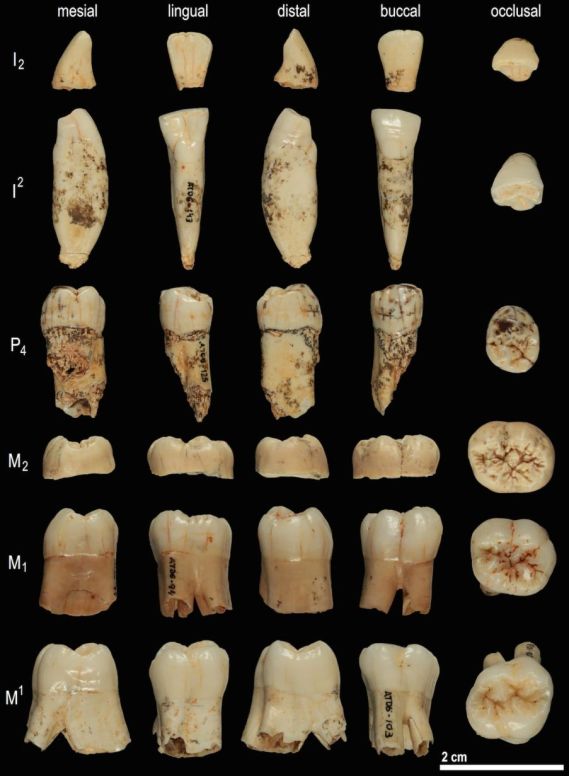
Oldest skeleton in Americas in underwater cave of Mexico

Oldest Skeleton in Americas Found in Underwater Cave? Deep inside an underwater cave in Mexico, archaeologists may have discovered the oldest human skeleton ever found in the Americas. Dubbed Eva de Naharon, or Eve of Naharon, the female skeleton has been dated at 13,600 years old. If that age is accurate, the skeleton—along with three others found in underwater caves along the Caribbean coast

Antonio Lombatti

Acqua di Colonia. Con profumo papale

Se l’hanno prodotta, di sicuro ci sono numerosi acquirenti. Almeno potenziali. Sto parlando dell’Acqua di Colonia del Papa, che hanno messo in vendita qui. Il costo? 25,95 $ a bottiglietta. Spassosi alcuni commenti per chi cercava un motto da accompagnare al favoloso profumo:

An infallible smell.
Why God gave us a nose.
Not for Luther.
Don't smell like a relic...smell incorrupt
Magisterial Musk.
An 'in scent' for the masses.
Smells like... salvation.
One billion Catholics. One scent.

Che merchandising ‘sta religione.

Dienekes' Anthropology Blog

Toumai not 7-million years old

Wikipedia on Sahelanthropus tchadensis. Finder of key hominid fossil disputes 7-million-year dating Brunet appeared to have scored a knockout blow in February this year, when radiological measurements estimated that the soil where Toumai was found was between 6.8 million and 7.2 million years old. ... But the man who discovered Toumai, Alain Beauvilain, of the University of Paris at Nanterre,

Antonio Lombatti

Low-cost Bibles

Cosa non si farebbe per diffondere il messaggio divino. Il Fondo Edizioni Sacre Scritture della Società Biblica di Ginevra riceve prenotazioni per vendere la Bibbia al prezzo di 1,50 €. Resta da sottolineare comunque che gli assidui frequentatori delle chiese cristiane non hanno mai letto una sola pagina dell’Antico o del Nuovo Testamento. A parte le letture che vengono loro proposte nelle celebrazioni liturgiche. È la triste verità che emerge da tutti i sondaggi. Insomma: un’ignoranza biblica della storia di Israele o del cristianesimo da parte dei credenti.

----------------------------------------------

The “Fondo Edizioni Sacre Scritture della Società Biblica di Ginevra” sells Bibles for just 1,50 €. It’s a waste of money anyway, since it’s proven that 90% of Christian church goers have never read a single page from the Old or New Testament except when they go to church.

Mark Goodacre (New Testament Gateway Weblog)

Secrets of the Jesus Tomb, on Five

Last night, the British channel Five (one of the five network channels in the UK, and the youngest) aired a new documentary produced by CTVC (who have a short page on it here) entitled The Secrets of the Jesus Tomb. According to The Guardian, it achieved 1.4 million viewers, which is probably about par for the course for a Five documentary. Five documentaries are not aimed at a high brow audience and in general are relatively undemanding, with plenty of exposition and repetition, some over-simplification and a straightforward structure, a narrative with talking heads and some drama. This documentary sits soundly in that sub-genre. If you were looking for a BBC4 style documentary, you would be disappointed. If you are a New Testament scholar hoping to see something new or different, you would almost certainly be disappointed. But the casual viewer, with a limited knowledge of the subject area, with the telly on in the background while doing the washing up, would find it pretty easy viewing. That casual viewer might have found it enjoyable and even informative.

For those who have followed the Talpiot tomb controversy over the last eighteen months (covered extensively on this blog), this documentary would not have provided any surprises, but for those looking for an introduction to the story, it would have been useful. And the absence of Simcha Jacobovici, and a more sceptical conclusion to the documentary made it much easier viewing than the Discovery Channel original Lost Tomb of Jesus that aired in the US in March 2007.

This documentary told the story of the discovery of the Talpiot Tomb, featuring reminiscences from Amos Kloner and Shimon Gibson, and it then developed the theory that this could be Jesus of Nazareth's tomb with visuals of each ossuary, and the writing translated to English. The middle section of the documentary made the case for that identification with extensive comment from James Tabor who was apparently filmed in Jerusalem. The narration in this section featured a lot of oversimplification and side-stepping, especially the confident assertion that Jesus had sisters called Mary and Salome, and that his brothers Judas and Simon would not be in this tomb because they were still alive after 70CE. And the (I think weak) case that the so-called Mariamne inscription points to Mary Magdalene was overstated (see my posts on Mariamne, Mary Magdalene and Mary of Bethany, Mariamne and the Jesus Family Tomb, Mariamene and Martha, Stephen Pfann, The Statistical Case for the Identity of the "Jesus Family Tomb" and others in the series) as were several of the other elements in the case.

The middle section of the documentary was peppered also by comments from Bart Ehrman and Tal Ilan, who also appeared in the final, sceptical section of the film in which the idea that this could possibly be Jesus of Nazareth's tomb was seriously questioned. The statistical case was discussed and broadly dismissed, though unfortunately without contributions from those like Randy Ingermason who have published on this. By the end of the programme, the case for the identification was left looking pretty deflated, and our casual viewer who had held on all the way through, now having finished his washing up, might have wondered whether it was really worth spending the time on a case that seemed weak. Still more should have been done on the sceptical side, though, and I was disappointed by the lack of involvement of several experts who have contributed to the debate, especially Stephen Pfann.

The documentary makers should, however, be lauded for avoiding sensationalism and for sounding fairly reasonable, at least by the end of the programme. A few features showed some sensitivity to scholarly conventions, like the use of "BCE" and "CE" (unexplained in the programme) rather than "BC" and "AD", but at other points repeated cliché (Christianity rocked to its foundations) and banality (Jesus was not a Christian) will have turned away the educated viewer. And if they said that ossuaries were bone boxes once, they said it a hundred times.

I always look at the credits on programmes like this, not least so that I can see if I know any of those involved. One disappointment here was that there was no historical consultant or advisor listed. I think it is a mistake for documentary makers not to employ proper historical consultants. They are inexpensive, they can be a gold mine of valuable information and there are things that experts can see that the programme makers will miss. It is a way of improving the quality of the final product, avoiding errors and holding yourself to account.

Some have reacted unfavourably to the documentary, most notably Andrea Mullaney in today's Scotsman, who calls it "moronic" -- Real Life Stupidity on a Biblical Scale (HT: Jim West). Since Mullaney is rightly unimpressed by the claims explained in the new documentary, one wonders what she would have made of the original Discovery channel documentary, produced by Simcha Jacobovici, that allowed so little room for dissenting voices. Andrew Billen in The Times was not much more impressed:
The programme displayed a surer mastery of the obvious. “One of the most famous figures in history,” the commentary explained about Jesus, “the truth about his life remains a mystery. But one thing is certain: Christ was not a Christian. Christianity only came into being after he died.” The conclusion that this feeble documentary more or less arrived at was something else obvious: the tomb probably wasn't Jesus's at all.
Robert Collins in the Telegraph was a little more positive, though he ends with the comment that "Like all Turin Shroud-esque conspiracies, it’s irresistible until the contradicting evidence comes along to spoil all the fun."

Update (Friday): Matt Page comments on Bible Films Blog.

British New Testament Conference 2008

The British New Testament Conference 2008 gets underway today in Durham. Although the website is still hosted here on NTGateway.com, I am not able to make it on account of being several thousand miles away, but the programme (PDF) looks interesting; see also the seminars. I look forward to reports from the ground, so far just Jim Davila on Paleojudaica.

Update (Friday): Nijay K. Gupta reports on day one.

Antonio Lombatti

Jewish Ossuaries by E. Meyers free on the web

Uno degli studiosi più apprezzati nel suo campo, Eric M. Meyers, scrisse nel lontano 1971 uno di quei libri che sarebbero diventati un punto di riferimento per lo studio delle pratiche di sepoltura nel giudaismo del Secondo Tempio. Si tratta di Jewish Ossuaries: Reburial and Rebirth pubblicato dall’Istituto Biblico di Roma.

Il volume può essere letto o scaricato gratuitamente da qui. Favoloso. Peccato solo che l’avevo comprato anni fa, quando Internet non era ancora così potente...

----------------------------------------------------------

Eric Meyer’s masterpiece on Jewish burial practices in the Second Temple Judaism - Jewish Ossuaries: Reburial and Rebirth (Rome: Biblical Institute, 1971) can still be bought here for 68 euros or it can be read for free here. What will you choose?

Nathan Elkins (Numismatics and Archaeology)

Obama and McCain on Art Policy...or not

In a previous discussion I mentioned that the Democratic presidential nominee, Barack Obama, has formed a National Arts Policy Committee. It appears that some other commentators have been trying to examine the art policies of the two primary presidential candidates in more detail.

Lee Rosenbaum references Obama's National Arts Policy Committee and discusses his "tax fairness" plan for artists (Obama Drama: Tax Fairness for Artists, Impact Film Festival). In today's post (Desperately Seeking John McCain's Arts Policy), she observes the Republican presidential nominee's art policy appears to be non-existent and relates his approach to art policy during his senatorial career.

Logos Bible Software Blog

Two Free Lutheran Lectionaries!

Thanks to the initiative of our friends at Concordia Publishing House, we are pleased to make available to you two Lutheran lectionaries:

  • Lutheran Service Book: One-Year Lectionary
  • Lutheran Service Book: Three-Year Lectionary

And they are absolutely free!

If you have one of our base packages that includes the Lectionary Viewer Addin (i.e., any Logos Bible Software 3 base package except for the Original Languages Library), then all you need to do is click the Download button on the Lutheran Lectionaries page or run Libronix Update from the Tools menu in Libronix.

If you have a base package that doesn’t include the Lectionary Viewer Addin, you have two options. You can purchase the Lectionary Viewer Addin for $19.95, or you can upgrade your base package to one of the latest and greatest. Visit our upgrade page to see your options.

If you have an older base package, upgrading is definitely the way to go. There are lots of resources and tools that you’re missing out on. See the 100 New Features in Logos Bible Software 3 and the Top 20 New Features.

Here’s an example of why upgrading is by far the better value. If you upgrade from Bible Study Library (QB) to Bible Study Library (ND), it will cost you only $39.90 (twice the price of the Lectionary Viewer Addin), but you will get—in addition to the Lectionary Viewer Addin—19 new resources, 2 new addins, and 3 new parallel passages! All of that for only $19.95 more!

If you already have the Lectionary Viewer Addin, visit the Lutheran Lectionaries page to get your new lectionaries. If you don’t, go check out your upgrade options.

Related Products:

Related Article:

K. Kris Hearst (About.com: archaeology)

TAC: Archaeology in High Def

The Archaeology Channel is currently offering a free look at some high-definition videos. In a partnership deal with VIRCAS, TAC is offering a download of the software and free access...

Ioannis Georganas (Mediterranean Archaeology)

Χείρα βοηθείας από το Πρίνστον στο αίνιγμα των τοιχογραφιών της Θήρας

Source: TA NEA

Τις εικόνες που σχηματίζουν χιλιάδες θρυμματισμένα κομμάτια τοιχογραφιών από το Ακρωτήρι της Θήρας αναζητούν εδώ και δεκαετίες οι αρχαιολόγοι με μοναδικά τους όπλα την παρατηρητικότητα και την υπομονή. Ένας νέος σύμμαχος έρχεται να προστεθεί στο επίπονο έργο τους, που αποτελείται από σκάνερ και ηλεκτρονικούς υπολογιστές- πρόγραμμα που αναπτύσσεται από το Πανεπιστήμιο του Πρίνστον σε συνεργασία με τους Έλληνες αρχαιολόγους, Χρίστο Ντούμα και Ανδρέα Βλαχόπουλο.

«Η νέα τεχνολογία παρέχει τη δυνατότητα να αλλάξει ο τρόπος της αρχαιολογικής έρευνας», λέει στο «Science Daily» ο καθηγητής Πληροφορικής στο Πρίνστον, Ντέιβιντ Ντόμπκιν. «Η νέα προσέγγιση πραγματικά κάνει τον υπολογιστή ερευνητικό συνεργάτη των αρχαιολόγων», προσθέτει ο καθηγητής που δουλεύει στο πρόγραμμα εδώ και δύο χρόνια και πρόσφατα παρουσιάστηκε, πρώτη φορά, σε συνέδριο.

Η αρχή έγινε πειραματικά από την τοιχογραφία με τις «Πολύχρωμες Σπείρες», ειδικότερα με τα μονόχρωμα τμήματα της τοιχογραφίας που είναι δυσκολότερο να τοποθετηθούν στην αρχική θέση τους.

Τα πρώτα αποτελέσματα κρίνονται ενθαρρυντικά, ενώ κατά τη διάρκεια του Σεπτεμβρίου το σύστημα πρόκειται να εγκατασταθεί μονίμως στο Ακρωτήρι.

Αρχικά τα θραύσματα τοποθετούνται σε έναν σαρωτή και σαρώνονται από διάφορες γωνίες. Στη συνέχεια οι επιφάνειές τους σαρώνονται με λέιζερ, ενώ βρίσκονται πάνω σε μια περιστρεφόμενη πλατφόρμα. Το λογισμικό του συστήματος αναλαμβάνει να συνδυάσει τα δεδομένα του σαρωτή και του λέιζερ και να δημιουργήσει ένα τρισδιάστατο μοντέλο του θραύσματος.

Το νέο σύστημα είναι φθηνότερο, πιο εύχρηστο και σχεδιασμένο εξαρχής να χρησιμοποιείται από τους ίδιους τους αρχαιολόγους και τους συντηρητές. Χρησιμοποιεί έναν συνδυασμό ισχυρών αλγόριθμων και μιας μεθόδου επεξεργασίας ανάλογης με την παραδοσιακή των αρχαιολόγων.

«Όταν το έργο ολοκληρωθεί, ο χρόνος ανακατασκευής ενός τοίχου θα μειωθεί από χρόνια σε μήνες. Θα απελευθερώσει τους αρχαιολόγους για άλλες πολύτιμες εργασίες», επισημαίνει ο καθηγητής Πληροφορικής στο Πρίνστον, Σίμον Ρουσίνκιεβιτς. «Δεν βρήκαμε τη λύση, αλλά ένα εργαλείο για να βρούμε τη λύση», προσθέτουν οι Έλληνες αρχαιολόγοι.

ArcheoBlog

Ritrovata colonna romana al largo di Anzio, dove i patrizi andavano in villeggiatura

Una colonna di marmo, risalente all’epoca romana, è stata recuperata dalla Finanza al largo di Torre Astura ad Anzio. Il ritrovamento conferma la presenza di un notevole patrimonio storico-archeologico nella zona di mare antistante l’oasi naturale.


Anzio - Torre Astura in una cartolina d’epoca

La colonna, alta quattro metri, per un diametro di circa 80 centimetri, rappresenta un ritrovamento significativo per il patrimonio archeologico del territorio.

Ad effettuare il ritrovamento sono stati gli uomini delle Fiamme Gialle della squadriglia nautica della Guardia di Finanza, guidata dal maresciallo Giuseppe Marrazzo. Il reperto, dopo un attento studio da parte degli esperti della Soprintendenza ai Beni Archeologici del Lazio, sarà ospitato nel Museo Archeologico di Anzio.

Anzio fu l’ultima città a cedere a Roma. Da allora fu colonia romana e sul finire dell’età repubblicana conobbe un grande splendore diventando il luogo di villeggiatura preferito dai patrizi. Lungo la costa vennero edificate le ville più importanti, palazzi, teatri e templi ornarono la città. E sicuramente la colonna ritrovata al largo di Torre Astura non fa altro che confermare l’antica storia della città. Durante l’età imperiale tutti gli imprenditori soggiornarono ad Anzio e Caligola ne voleva fare addirittura la capitale dell’impero. A valorizzarla ulteriormente fu Nerone, nato proprio ad Anzio, che fece realizzare il porto con una grande opera di ingegneria marittima.

Fonte:
http://iltempo.ilsole24ore.com/

Commenta la notizia e partecipa alla discussione - (1) Messaggi

Le gemelle mai nate di Tutankhamon

Forse erano due gemelle i feti mummificati ritrovati all’interno della tomba di Tutankhamon, lo dice il professor Connoly, antropologo dell’università di Liverpool. I due corpicini presentano un’età gestazionale apparentemente diversa, questa differenza pare sia dovuta alla giovane età della madre, la regina Ankhesenamon.

Gli studi continuano per essere sempre più certi che i feti possano effettivamente essere le figlie del faraone oppure se questi piccoli corpi furono seppelliti con lui per simboleggiare la rinascita del re a nuova vita.

S.

http://www.egiptologia.com/content/view/2762/74/

Commenta la notizia e partecipa alla discussione - (1) Messaggi

ARTL Weblog: Association for Latin Teaching

Single sex boys’ school opened in Philadelphia


PHILADELPHIA – Calling all ninth-grade boys! Raise your hand if this
school sounds like fun: wearing jackets and ties every day, staying
until 5 p.m., learning Latin and – to top it all off – no girls.

Who’s in?

Turns out, about 270 boys. And 100 more are on a waiting list.

Boys’
Latin of Philadelphia, one of the city’s newer charter schools, began
its second year on Wednesday, aiming to be an educational beacon in the
financially and academically troubled district. But because it is a
single-sex public school - one of four in the city - Boys’ Latin faced
huge opposition and almost didn’t exist.

Critics contend it’s
unfair for taxpayers to fund a prep school curriculum for boys only.
Supporters say Boys’ Latin is desperately needed in a city where 45
percent of students drop out and male academic achievement badly lags
that of females.

“Obviously something had to be done differently
to engage these young men and prepare them for graduation, and for
success beyond high school graduation,” said David Hardy, Boys’ Latin
co-founder and acting principal.

The Women’s Law Project and the
American Civil Liberties Union of Pennsylvania had opposed Hardy’s
charter application based on its exclusion of girls. It was initially
rejected by Philadelphia school officials in January 2006, but was
approved five months later after then-district CEO Paul Vallas called
the gender achievement gap “a crisis.” Boys’ Latin opened in fall 2007.

New rules implemented by the U.S. Education
Department in 2006 allow same-sex education whenever schools think it
will expand the diversity of courses, improve students’ achievement or
meet their individual needs.

But ACLU attorney Mary Catherine
Roper said those regulations conflict with the Constitution and Title
IX, a federal law banning sex discrimination in education.

There are nonexclusionary ways to improve education, such as decreasing class sizes , she noted.

“There is no justification for offering kids different opportunities based on their gender,” said Roper.

The
167,000-student Philadelphia district, which is under state supervision
for poor performance, has tried to improve by establishing charter
schools, hiring private companies and universities to manage schools,
and offering single-sex education.

Results have been mixed.
Three months ago, the district took six schools away from private and
university managers for failure to improve sufficiently, including
all-boys FitzSimons High School, which had been run by Victory Schools.

Four
percent of FitzSimons’ 11th graders were proficient or higher in math,
and 10 percent were proficient or higher in reading on last year’s
state standardized tests. FitzSimons was also labeled a “persistently
dangerous” school by the state this year.

The district did renew
Victory’s contract for all-girls Rhodes High School. In reading, 14.7
percent of juniors were proficient or higher, 3 percent proficient or
higher in math.

A district spokeswoman declined to comment and said new district CEO Arlene Ackerman was not available.

There
are at least 442 public schools in the U.S. with single-sex educational
opportunities, according to the Exton-based National Association for
Single Sex Public Education. Most of those are coed schools offering
single-sex classrooms.

Asking if single-sex education is good is
like asking if coed education is good, said Leonard Sax, the
association’s executive director.

“It’s a very diffuse and not
very meaningful question,” Sax said. “There are different rationales
for single-sex education and different track records.”

Juniors
at the city’s public High School for Girls, which has been single-sex
since its founding in 1848, scored 79.3 percent proficient or higher in
math and 85.3 percent proficient or better in reading. Hardy noted that
no one has suggested making t hat school coed.

Peter Kuriloff,
research director at the Center for the Study of Boys’ and Girls’ Lives
at the University of Pennsylvania, thinks single-sex classrooms are
worth trying in some cases if paired with a strong curriculum.

“It
is not a panacea,” said Kuriloff. “Just putting boys in a boys school
and girls in a girls school is not going to do anything.”

Richard
Cherry Sr. said he sent his son, Richard Jr., to Boys’ Latin because of
the smaller class sizes and personal attention. He feared his son would
get “lost in the system” at district high schools that he described as
chaotic and sometimes violent.

Omar Ortiz, 14, a freshman at
Boys’ Latin, said he wa